




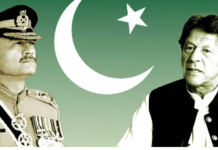





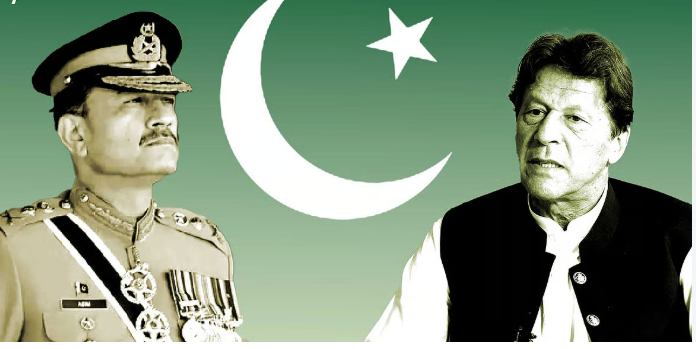
Pakistan’s political crisis remains locked in a confrontation that refuses to disappear: Imran Khan versus the country’s powerful military establishment.
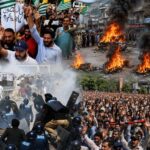
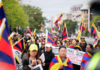
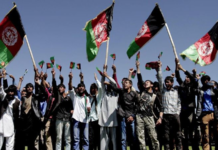
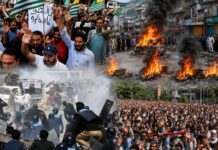
Three years after Khan was imprisoned, the former prime minister remains at the centre of Pakistan’s political landscape. His Pakistan Tehreek-e-Insaf (PTI) continues to mobilise supporters, while the government and security authorities are taking increasingly stringent measures to prevent the party’s protests from reaching Islamabad. A nationwide PTI march is scheduled for September 27, with Khan’s release among its principal demands.
The result is a political standoff in which neither side has produced a durable route back to normal politics.
Imran Khan Remains the Unresolved Political Question
Khan has been imprisoned since 2023 and is serving sentences arising from corruption and state-gifts cases. He denies the charges and PTI maintains that his imprisonment is politically motivated. Courts have dealt differently with individual cases, making it important not to treat all of the proceedings as one legal judgment.
Yet regardless of the competing legal claims, the political reality is clear: Khan’s imprisonment has not removed him from Pakistan’s political contest.
His supporters continue to mobilise around his release, while his opponents continue to treat PTI-led street mobilisation as a major security and political challenge.
That is the contradiction confronting Pakistan’s political system: the state can imprison a political leader, but imprisonment alone has not settled the political dispute surrounding him.
The Military’s Role Remains Central
Pakistan’s civil-military imbalance has long been a defining feature of its politics. Recent changes have intensified the debate.
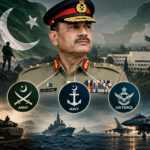
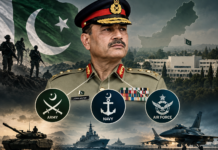
Parliament passed legislation in August 2026 giving the newly established Chief of Defence Forces position operational command and control over the armed forces. Field Marshal Asim Munir currently holds that position alongside the army chief role. Analysts cited by Al Jazeera have described the legislation as a major restructuring of Pakistan’s military command system.
Against this backdrop, the Khan confrontation carries significance beyond one politician.
It raises a fundamental question about where political power ultimately rests when an elected government, opposition movement, judiciary and military establishment become entangled in the same political struggle.
Islamabad’s Response: Block the Protest
The government’s response to the September 27 mobilisation has been uncompromising.
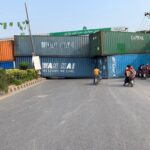
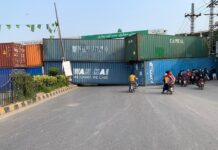
Authorities have erected roadblocks around Islamabad, deployed large numbers of police and warned that the march will not be allowed to enter the capital. Imran Khan’s sister Aleema Khan was also detained for 30 days ahead of the planned demonstration.
Amnesty International has criticised the pre-emptive detention of Khan’s relatives and PTI activists, arguing that authorities should facilitate peaceful assembly rather than assume a protest will become violent before it begins.
The government, however, has pointed to public-order concerns and an Islamabad High Court ruling that political parties cannot occupy public roads, highways or government buildings.
The competing positions expose the depth of the confrontation.
PTI sees mobilisation as political resistance. The authorities see preventing the march as maintaining public order.
Neither interpretation has resolved the underlying dispute.
A Political Crisis That Keeps Reproducing Itself
The confrontation has become cyclical.
Khan remains imprisoned.
PTI continues to demand his release.
Authorities impose restrictions.
PTI mobilises again.
The state responds with arrests, barricades and security deployments.
And the political confrontation returns to the streets.
Even Reconciliation Signals Have Failed to End the Standoff
There have been signals that reconciliation with the military establishment could theoretically be possible.
In August, PTI spokesperson Zulfi Bukhari told Reuters that Khan would not confront Army Chief Asim Munir if released, suggesting a possible shift away from direct confrontation. But Bukhari also said there were no talks between PTI and the military at that time.
The absence of a sustained political settlement means the possibility of reconciliation remains separate from an actual resolution.
Meanwhile, the streets remain the arena in which the dispute is repeatedly tested.
Pakistan’s Governance Problem Is Bigger Than Imran Khan
The Khan-military confrontation has exposed a broader institutional problem.
Pakistan is attempting to manage political conflict through a mixture of courts, administrative restrictions, policing and security measures while the opposition continues to command significant political attention.
That creates a dangerous feedback loop:
political confrontation produces restrictions; restrictions produce further mobilisation; mobilisation produces tougher security measures; and tougher measures deepen political mistrust.
The longer that cycle continues, the harder it becomes to restore ordinary democratic competition.
Pakistan therefore faces a choice of political mechanisms rather than merely a choice of personalities: whether disputes between the government and opposition can ultimately be handled through representative institutions, courts and negotiations rather than repeated confrontation in the streets.
Until that question is settled, Imran Khan will remain less a closed chapter in Pakistani politics than a continuing fault line running through the country’s civil-military and political order.