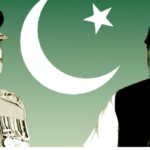


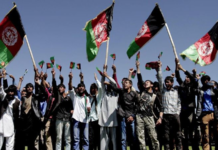












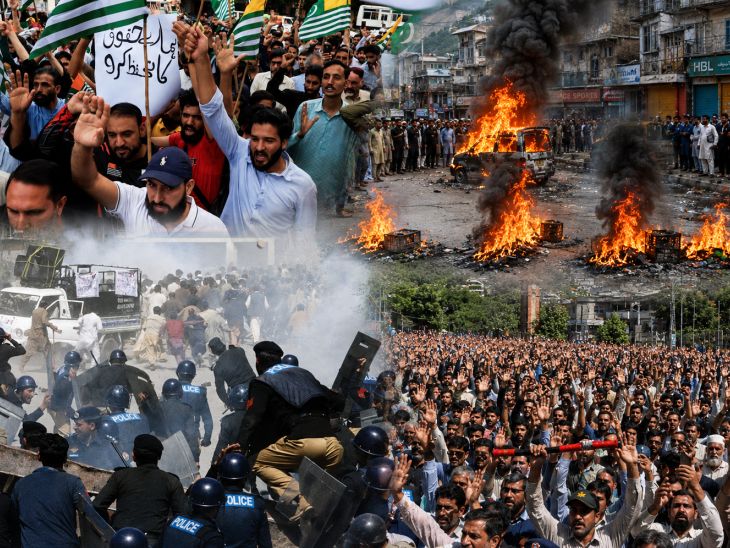
Pakistan’s control over Pakistan-administered Jammu and Kashmir is facing a serious political test. What began as demands over electricity, flour and economic relief has evolved into a broader confrontation over political representation, electoral arrangements, governance and the role of Islamabad.
The unrest is not simply about one disputed provision. It reflects years of accumulated grievances and a widening gap between the people of PoJK and the political system governing them.
At the centre of the latest confrontation is the Joint Awami Action Committee (JAAC) and its demand to abolish 12 legislative seats reserved for refugees from Indian-administered Kashmir who now live elsewhere in Pakistan. JAAC argues that the arrangement distorts local representation and gives political parties based in Pakistan additional influence over the region’s legislature. Pakistani authorities reject those allegations, while the region’s Supreme Court has ruled that the reserved seats are constitutionally protected unless the relevant constitutional provisions are amended.
When Representation Becomes a Flashpoint
The political dispute has become increasingly difficult for Islamabad to contain.
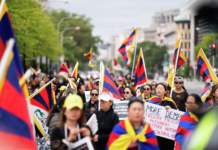
Authorities banned JAAC under the regional Anti-Terrorism Act in June, while communications restrictions and security deployments accompanied the crackdown. Reuters reported that authorities also registered sedition cases against four prominent JAAC leaders and announced a reward for information leading to their arrest.
For critics, this response raises a fundamental question: why is a dispute over political representation being handled primarily through security measures rather than sustained political dialogue?
Whatever one’s position on the reserved seats, the intensity of the confrontation demonstrates that the issue has become a symbol of a much wider governance dispute.
A Crisis Bigger Than the 12 Seats
The protests did not emerge overnight.
The JAAC movement first gained prominence through campaigns over electricity prices, flour shortages and economic grievances. Its 2025 charter expanded those concerns into a broader list involving governance, public services, accountability and political representation.
That history matters.
When economic grievances repeatedly become political protests, and political protests repeatedly become security confrontations, the problem cannot be reduced to law and order.
It points to a deeper failure to resolve grievances through functioning political institutions.
The Price of Suppression
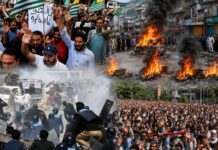
The human cost has been significant.
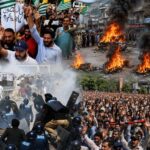
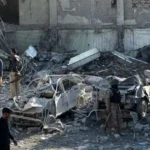
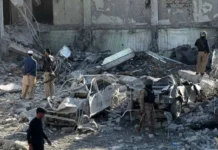
Reuters reported that at least 11 people were killed in clashes in Rawalakot in June, while Amnesty International subsequently reported at least 40 deaths, including protesters and security personnel. Later reporting noted that higher local estimates circulated but could not be independently verified because of communications restrictions.
The communications blackout has itself become part of the controversy. Restricted internet access made independent verification of casualty figures and competing claims considerably more difficult.
That creates another governance problem: when information disappears during a political crisis, mistrust grows faster than facts can catch up.
Elections Under a Cloud of Conflict
The crisis also spilled directly into the electoral process.
The 2026 regional elections were divided into three phases amid continuing unrest. Reuters reported that the first phase was accompanied by deadly clashes, while the opposition PTI boycotted the vote citing electoral-fraud concerns. The JAAC-led movement simultaneously challenged the political system surrounding the disputed reserved seats.
This created an extraordinary political environment: protests, security deployments, contested representation, an internet blackout and elections unfolding simultaneously.
Such circumstances inevitably raise questions about the credibility and inclusiveness of political institutions.
Islamabad Cannot Govern Through Permanent Confrontation
Pakistan can deploy security personnel.
It can impose restrictions.
It can ban organisations.
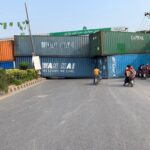
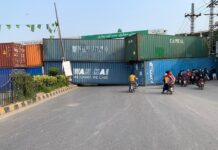
It can block roads and communications.
But these measures cannot permanently resolve political grievances.
The continuing protests demonstrate that the underlying dispute over representation and governance has not disappeared. Analysts cited by Al Jazeera describe the crisis as part of a much longer debate involving political representation, resource distribution, governance and regional autonomy.
The warning for Islamabad is straightforward: political grievances do not disappear because streets are closed.
They become deeper when people believe institutions are unwilling or unable to address them.
A Governance Crisis Pakistan Cannot Hide
Pakistan frequently presents itself as a defender of Kashmiris on the international stage. Yet the unrest inside PoJK has placed Islamabad’s own governance record under scrutiny.
If citizens demanding political representation are met with bans, arrests, communications restrictions and security deployments, Pakistan faces an uncomfortable contradiction between its external rhetoric and the political realities inside the territory it administers.
The issue is therefore larger than one protest movement or one set of legislative seats.
It is about representation, accountability, economic rights and the ability of institutions to resolve political disputes without turning them into security crises.
PoJK’s continuing unrest has exposed a widening political divide—and it has also exposed the limits of a governance model that repeatedly reaches for control when dialogue is needed.
Roadblocks can silence a street. Blackouts can silence a region. Arrests can silence individuals. But none of them can silence an unresolved political grievance.