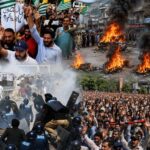










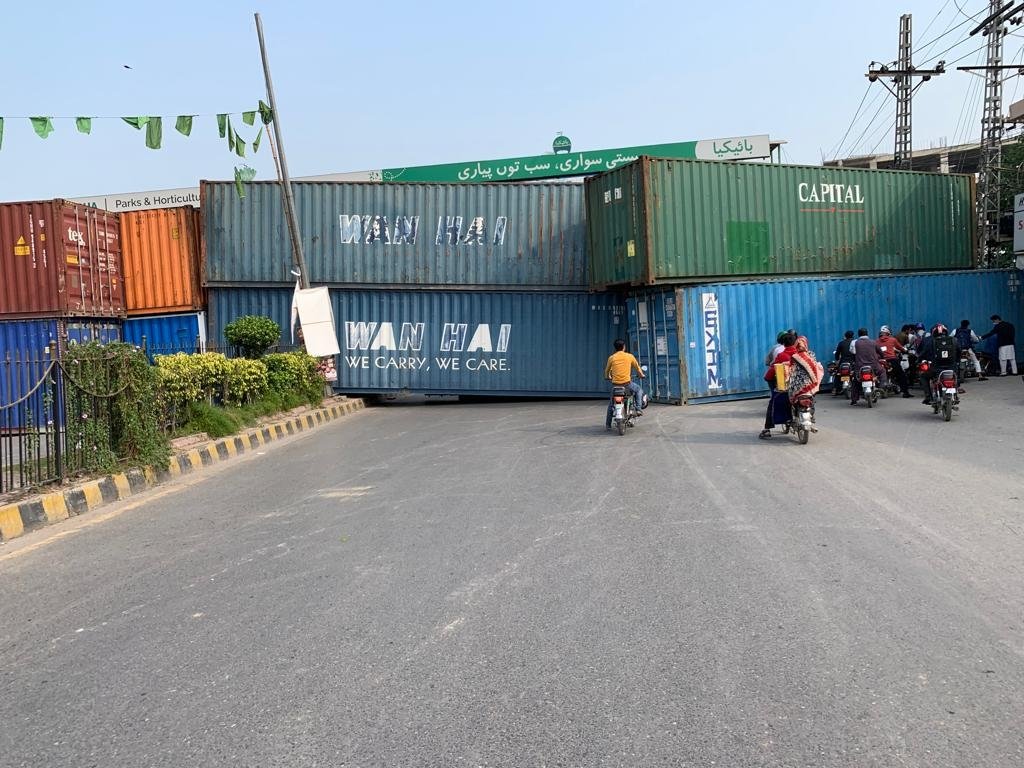
Pakistan’s governance crisis is increasingly visible not only in political confrontation, but in the state’s response to dissent. As opposition groups prepare protests, authorities have resorted to arrests, administrative detention, roadblocks and heavy security deployments—measures that critics say are narrowing the space for peaceful political activity.
The latest confrontation centres on Pakistan Tehreek-e-Insaf (PTI), which has planned nationwide protests for September 27. Ahead of the demonstrations, authorities detained members of Imran Khan’s family and PTI activists. Aleema Khan was placed under 30-day administrative detention, while other relatives and party workers were also detained. Amnesty International reported that some activists were released only after signing affidavits promising not to participate in the protests.
The government has defended its measures on public-security grounds. Interior Minister Mohsin Naqvi said authorities would prevent the planned march from entering Islamabad, while the Islamabad High Court ruled that political parties do not have a right to occupy public roads, highways or government buildings.
But the scale and timing of the restrictions raise a larger governance question: when political mobilisation is met pre-emptively with detention and physical barriers, where does legitimate public dissent fit into Pakistan’s political system?
From Protest Management to Political Containment
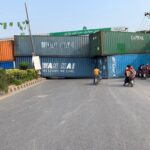
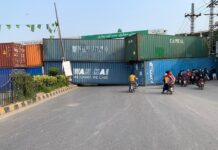
Roadblocks may stop a march. Police deployments may disperse crowds. Administrative detention may keep organisers away from demonstrations.
But none of these measures addresses the political grievances that bring people onto the streets.
Human Rights Watch has documented a broader pattern of restrictions on political opposition, media and civil society in Pakistan, including the use of broad laws against dissent.
Amnesty International has likewise reported escalating restrictions on freedom of expression and assembly. Its recent assessment of the PTI crackdown specifically pointed to pre-emptive arrests, roadblocks and threats to prevent the September 27 mobilisation.
This creates a dangerous political cycle: dissent generates confrontation, confrontation generates tougher restrictions, and tougher restrictions deepen mistrust in institutions.
The Message to Opposition Voices
Pakistan’s treatment of political opponents has become another test of its governance model.
The recent detention of Imran Khan’s relatives came before a planned political demonstration rather than after a reported act of violence at that demonstration. That distinction matters because preventive restrictions can transform ordinary political mobilisation into a security issue before protesters even take to the streets.
The government may argue that such action is necessary to prevent disorder. Its opponents see it as an attempt to suppress mobilisation. The competing claims themselves demonstrate the depth of Pakistan’s political confrontation.
The problem becomes even more serious when legal mechanisms intended for public order are repeatedly deployed against political actors.
When the Security State Replaces Political Dialogue
Pakistan already faces militant violence, economic pressures, regional tensions and institutional confrontation. In such an environment, treating political dissent primarily as a security problem risks further weakening confidence in civilian governance.
Recent cases involving lawyers and activists illustrate the wider concern. Amnesty International reported that lawyers Imaan Mazari-Hazir and Hadi Ali Chattha were re-arrested shortly after Pakistan’s Supreme Court suspended their sentences and granted them bail. Human Rights Watch has separately raised concerns about their rearrest and the use of an older case against them.
These cases add to concerns about whether Pakistan’s legal and security apparatus is being used proportionately when dealing with political opposition and dissent.
Governance Cannot Run on Roadblocks
A stable political system does not eliminate disagreement. It provides institutions through which disagreement can be expressed without turning every protest into a confrontation with the state.
Pakistan’s current trajectory presents the opposite picture: opposition mobilisation is increasingly surrounded by arrests, restrictions and security measures, while political trust continues to erode.
The central governance challenge is therefore not simply whether authorities can stop the next protest.
It is whether Pakistan can create enough political space for grievances to be expressed without arrests becoming the first response and security deployments becoming the default language of governance.
A government can control roads.
It can restrict gatherings.
It can detain organisers.
But none of these measures can substitute for political legitimacy, institutional trust or meaningful dialogue.
If dissent is continually treated as a threat to be contained rather than a political reality to be addressed, Pakistan’s governance crisis risks becoming self-reinforcing: less political space, greater confrontation, deeper instability.