

















Pakistan’s Inter-Services Intelligence (ISI) is playing a far more calculated and dangerous role in the narrative-driven mobilisation unfolding in Bangladesh ahead of the upcoming general elections. The pattern is significantly more dangerous than the phase seen in July 2024, with the agency exploiting a volatile political mood while avoiding overt leadership of the unrest.
The current atmosphere has been further inflamed by the death of student leader Sharif Osman Hadi, which triggered a surge of violent protests late Thursday. Hadi, a prominent activist who emerged during last year’s uprising that led to the fall of the Sheikh Hasina government, was critically wounded in a shooting in Dhaka last Friday during the launch of his election campaign. Masked attackers shot him in the head, and although he was moved to Singapore after initial treatment in Bangladesh, he died six days later on life support.
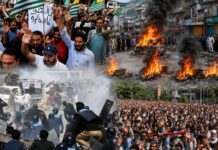
His death ignited immediate unrest across the capital. Footage shared on social media showed groups damaging property, including offices linked to major newspapers such as Prothom Alo and the Daily Star, with demonstrators chanting slogans bearing Hadi’s name.
Reports also said the Awami League’s office in Rajshahi was set ablaze, while protesters vandalised the premises of Prothom Alo, one of the country’s most influential Bengali-language dailies. Interim leader Muhammad Yunus called Hadi’s death a profound blow to Bangladesh’s political and democratic life and promised a transparent investigation while appealing for calm.
It is within this volatile environment that ISI is inserting itself. The agency has directed Jamaat-e-Islami and its student and madrasa-linked affiliates not to lead the agitation but to fuel it from behind the scenes. The intent is to keep local actors visibly at the forefront, allowing the movement to appear organic while external networks amplify its energy.
Pakistan’s involvement is not in open direction of unrest but in exploiting it. ISI’s footprint is visible in the amplification of violence and in the activation of Islamist networks at critical moments. Financial and digital activity linked to Pakistan is also driving the narrative. Certain Bangladeshi media voices have been funded through Pakistan-backed channels, and several social media handles influencing the unrest are operating from Pakistani territory. These platforms have repeatedly attempted to portray India in a negative light, leaning on the perception among some groups that New Delhi is a protector of Sheikh Hasina.