


























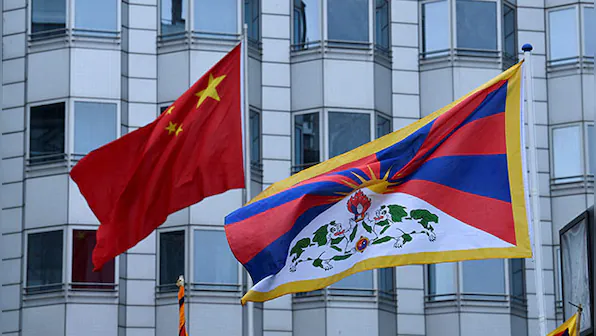
For decades, the steady flow of Tibetans escaping across the Himalayas into India and Nepal served as a barometer of conditions inside Tibet.
From the late 1990s through the mid‑2000s, several thousand Tibetans sought exile every year, bringing firsthand accounts of political restrictions, cultural pressures and daily life under Chinese rule.
But data from the Central Tibetan Administration in Dharamsala, the de facto capital of Tibetans in exile where the 14th Dalai Lama also resides, has revealed a collapse in the number of newly arrived Tibetans
Between 1995 and 1999, more than 12,000 Tibetans successfully sought exile. In the past five years, that number has plummeted to just 81.
With fewer Tibetans able to leave, independent information is becoming scarcer. That has made Beijing’s policies, like religious regulation, language reforms, or rural relocation, more opaque to the outside world.
This comes as Beijing is increasingly promoting its own narratives on development and stability in Tibet.
Lobsang, a middle-aged man who left Tibet in 2010, said the drop in the number of exiles comes as China has tightened its grip.
“Since 2008, the security architecture within Tibet has undergone a total transformation,” he told DW.
“What we see now is a high-tech surveillance web where every village, every monastery and every household is monitored. Reaching the border is now nearly impossible for the average Tibetan,” he added.
China’s development and control
The data suggests that the steepest drop in exiles began after large-scale protests in 2008 that spread across Tibet ahead of the Beijing Summer Olympics, prompting a heavy security response from Chinese authorities.
In the years that followed, Beijing expanded policing, digital surveillance and border enforcement across the Tibetan Plateau.
Chinese authorities say their policies in Tibet have improved living standards, expanded infrastructure and reduced poverty, leading to fewer people leaving.
The Chinese government has invested heavily in infrastructure, urban development and public services across Tibetan regions. In the eyes of Beijing, the porous border was a liability.
“The young Tibetan population … is increasingly migrating to larger [Chinese] cities and seeking to benefit from the growing Chinese economy,” said Atul Kumar, a fellow with the strategic studies program at the Delhi-based Observer Research Foundation (ORF) think tank.
Observers admit that socioeconomic conditions in many Tibetan areas have changed significantly over the past two decades, even as political controls have tightened in Tibet and Xinjiang.
Despite recent developments, human rights organizations, including Amnesty International and Human Rights Watch, have regularly documented increased restrictions on movement, religious activity and communication in Tibetan regions alongside Beijing-backed development.