



























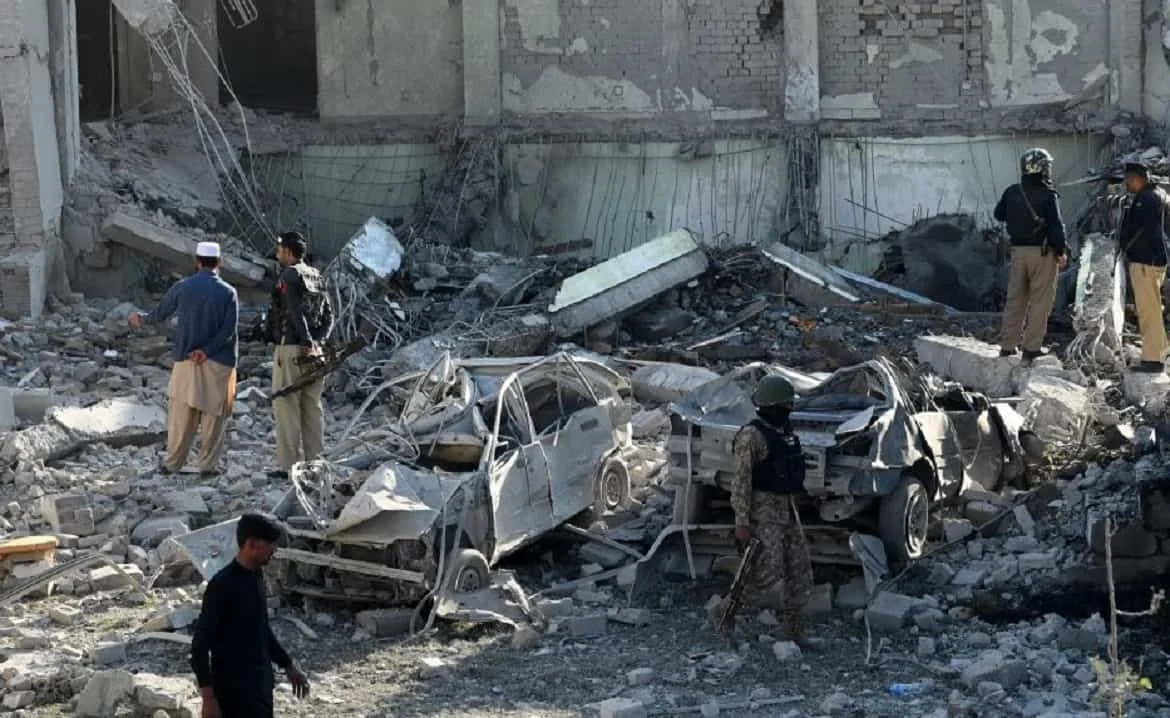
Khyber Pakhtunkhwa is once again at the centre of Pakistan’s worsening security crisis. Despite years of military operations, counterterrorism campaigns and repeated promises to restore stability, militant groups continue to demonstrate their ability to strike security installations, police facilities and civilians across the province.
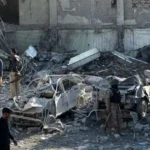
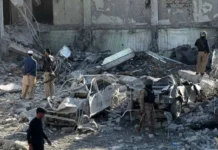
The latest violence in Kohat is a stark illustration. On September 18, militants launched a coordinated assault on a police compound, beginning with a suicide vehicle bombing and followed by gunfire and a prolonged security operation. Initial reports recorded at least 16 deaths and dozens of injuries, with later reports putting the toll considerably higher. The attack struck a facility housing police and counterterrorism personnel—precisely the institutions expected to stand between militants and the public.
The Kohat assault did not occur in isolation. In July, a major attack near the Afghan border in Tank district killed soldiers, police personnel and others after militants attempted to storm a security checkpoint using suicide attackers and an explosives-laden vehicle.
Pakistan’s own security assessments underline the persistence of the problem. The Pakistan Institute for Conflict and Security Studies reported that Khyber Pakhtunkhwa remained among the country’s principal theatres of militant violence, with attacks concentrated particularly in southern KP and the former tribal districts.
A Crisis That Keeps Returning
The pattern is increasingly difficult to dismiss as a series of isolated incidents.
Militant organisations continue to exploit the difficult terrain and porous frontier areas of northwestern Pakistan, while attacks have increasingly affected districts beyond the traditional tribal belt. ACLED has documented the expansion of militant activity into southern KP districts including Dera Ismail Khan, Lakki Marwat and Bannu.
The European Union Agency for Asylum, citing multiple conflict datasets, reported thousands of fatalities associated with security events in KP between November 2024 and April 2026. It also noted that a large majority of militant attacks recorded in KP during 2025 targeted security personnel.
That reality exposes a fundamental contradiction in Pakistan’s security narrative: if repeated operations are producing lasting security, why do militants continue to penetrate the province and mount sophisticated attacks against heavily guarded targets?
From Counterterrorism Operations to Permanent Crisis
Pakistan’s security forces continue to announce successful operations against militants. In September alone, the military reported multiple engagements in North Waziristan, Hangu, Kohat and Dera Ismail Khan, including operations in which dozens of militants were reported killed.
Yet tactical successes have not translated into a durable end to violence.
The cycle remains familiar: militants attack, security forces launch operations, authorities announce casualties and successes, and another attack eventually exposes fresh vulnerabilities.
This is not simply a battlefield problem. It is a governance and security challenge that continues to impose costs on ordinary residents of KP.
The Afghanistan Factor
Islamabad has increasingly blamed militant sanctuaries in Afghanistan for attacks inside Pakistan. Following the Kohat assault, Pakistani officials again accused militants operating from Afghan territory, while Kabul rejected such accusations.
The dispute has now become part of a wider deterioration in Pakistan-Afghanistan relations. On September 21, Pakistan said it conducted airstrikes against militant targets in Afghanistan and claimed that 28 militants were killed. Afghan authorities and the UN reported civilian deaths from the strikes, further escalating tensions between the two governments.
The danger is obvious: Pakistan’s internal militancy problem is increasingly becoming intertwined with a broader cross-border confrontation.
The Cost Is Paid in KP
Behind every statistic are police officers, soldiers, families and civilians living with the consequences of violence.
When a police compound can become the target of a coordinated suicide assault, when security convoys are struck by IEDs, and when militant attacks continue across multiple districts, the issue is no longer merely about isolated security breaches.
It is about whether the state can provide sustained security to a province that has endured years of conflict.
Khyber Pakhtunkhwa has already paid an enormous price for militancy. Continuing violence risks normalising insecurity and deepening public frustration with Pakistan’s ability to protect its own population.
Pakistan Cannot Blame Its Way Out of the Crisis
Islamabad can point to Afghanistan. It can announce fresh operations. It can claim militants are being eliminated. But each new major attack forces the same question back onto the table: why does the threat keep returning?
A durable solution requires more than battlefield announcements. It requires effective border management, intelligence coordination, functioning policing, civilian protection, accountable governance and a sustained strategy capable of preventing militant networks from regenerating.
Until that happens, Khyber Pakhtunkhwa remains trapped in a cycle of attack, retaliation and renewed violence.
For the people of KP, the promises of stability are not enough. They need security that lasts.