






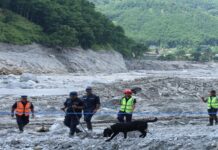














Days after the devastating flash floods in Nepal and Tibet killed hundreds, reports are emerging that China’s control over information is hampering the overall assessment of the damage caused in Tibet. The floods devastated villages along the Himalayan border region that straddles Nepal and the Chinese region of Tibet.
On Friday, officials in Nepal noted that over 538 people died in the catastrophe, while China kept the death toll to five on the Tibetan side of the border. While in Nepal, journalists were given full access to report on the matter; in China, state media carried several broadcasts about the floods and dispatched their own journalists to the area, but the reports focused on rescue operations rather than the scale of devastation.
A prime example of this was that in one of the state television broadcasts, from a relief centre in Tibet, the journalist did not speak to any of the people sitting behind him. It is pertient to note that Tibet was brought under Chinese control back in the 1950s. It is seen as the most sensitive and tightly controlled region in the country.
International journalists are not allowed to visit Tibet, apart from being on tightly choreographed government tours. Not only that, many in Tibet are not allowed to carry a passport and, in turn, have limited contact with the outside world.
The curbs amid disaster
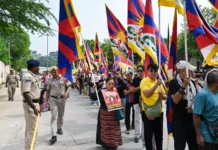
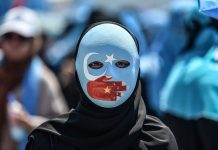
Not only that, Tibetans can be punished for speaking to journalists. For years, human rights groups have slammed China’s policies on Tibetan language and culture, which activists say are under attack. All these restrictions make independent assessments of how the flash floods have affected the Tibetan side of the border difficult.
“Everything about Tibet is seen through the national security prism. And therefore nobody is going to say anything or report anything that has not been cleared from the very top,” said Steve Tsang, the director of the China Institute at Soas University of London.
For anyone on the ground, “you can’t report a higher figure of deaths, even if you have seen more bodies yourself, until the official statement says that the figure has gone up,” Tsang explained. Not only this, China’s tight controls on information are limiting international coverage of its relief efforts. That may mean China is missing an opportunity to tell its own good news story.
It is pertinent to note that the Chinese emergency services, including the People’s Liberation Army, are vastly better resourced than their Nepalese counterparts. China has dispatched hundreds of emergency service personnel. However, there is scant detail on what they are doing. “The Chinese have missed a trick,” Tsang said. But “they don’t have that confidence. Their instinct is control.”