
























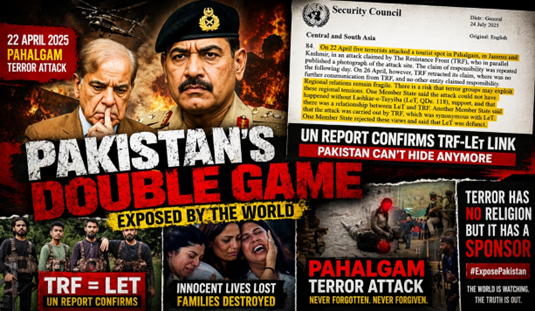
The flip-flop by The Resistance Front (TRF)—a proxy for the Pakistan-based Lashkar-e-Taiba (LeT)—in claiming and then denying responsibility for terror attacks, such as the April 2025 Pahalgam incident, is a deliberate tactic intended to manage international pressure while maintaining a semblance of local insurgency.
This pattern follows a well-established script designed to create “plausible deniability” for its handlers. Key aspects of this strategy include:
- Initial Boastful Claims: TRF often quickly claims responsibility on digital platforms to demonstrate lethality and attract attention, as seen following the April 2025 massacre of civilians in Pahalgam.
- Rapid Retraction: When faced with international condemnation or potential military retaliation, the group denies involvement, often claiming “cyber intrusions” or that the initial message was “unauthorized”.
- Weaponizing Digital Platforms: The group utilizes Telegram, encrypted messaging apps, and social media to spread propaganda, glorify violence, and issue threats, which they then claim are compromised when a retraction is needed.
- The “Local Resistance” Narrative: TRF was specifically created to rebrand LeT activities as a “local” Kashmiri uprising to avoid international scrutiny and potential action by global watchdogs like the FATF.
- ISI Backing: Security experts widely consider TRF to be directed by Pakistan’s Inter-Services Intelligence (ISI), with the flip-flops serving as a “revolving door” of denial and responsibility.