




























For over seven decades, the spectre of authoritarianism has loomed large over the Tibetan plateau. Since the People’s Republic of China (PRC) solidified its control in 1951, Tibet has been subject to a systematic and ever-tightening grip that has sought to remould its unique cultural, religious and social fabric into a state-sanctioned image. While Beijing touts’ economic development and modernization as the fruits of its governance, critics and Tibetans in exile point to a far grimmer reality: a relentless campaign of political repression, cultural assimilation and religious persecution.
The historical narrative itself is a point of contention. Beijing asserts that Tibet has been an inseparable part of China for centuries, a claim disputed by many Tibetans and international scholars who point to Tibet’s long history as an independent nation with its own distinct government, language and spiritual traditions. The “Seventeen-Point Agreement” of 1951, which formalized Chinese sovereignty, is viewed by the Tibetan government-in-exile as having been signed under duress.
Following a failed uprising in 1959, the 14th Dalai Lama, Tibet’s spiritual leader, fled to India and since then, the Chinese government has consolidated its control over every facet of Tibetan life. This control is maintained through a multi-pronged strategy that leaves little room for dissent or the expression of a distinct Tibetan identity.
The Surveillance State and the Erosion of Freedoms. At the heart of China’s control is a pervasive surveillance apparatus. Urban centres and, increasingly, rural areas are blanketed with CCTV cameras, many equipped with facial recognition technology. A “grid management” system divides communities into small, easily monitored units, fostering an atmosphere of mutual surveillance. This is further augmented by a heavy police and military presence, creating an environment where any form of protest is swiftly and often brutally suppressed.
Freedom of expression is virtually non-existent. Any open display of loyalty to the Dalai Lama, possession of his image or the celebration of his birthday can lead to arrest and imprisonment. The internet is heavily censored and communication with the outside world is severely restricted.
The Assault on Religious and Cultural Identity. Tibetan Buddhism, the bedrock of the region’s culture, has been a primary target of the state’s efforts to remould Tibetan society. Monasteries, once vibrant centres of learning and culture, are now tightly controlled by government-appointed management committees. The number of monks and nuns is strictly limited and they are subjected to “patriotic education” campaigns that compel them to denounce the Dalai Lama and pledge allegiance to the Communist Party. The state has also asserted its authority over the reincarnation process of high lamas, a move seen as a direct attempt to control the future of Tibetan Buddhism itself.
The Tibetan language is being systematically marginalized. While officially recognized, Mandarin Chinese is the language of government, commerce and increasingly, education. This policy of “bilingual education” is viewed by many as a tool for cultural assimilation, gradually eroding the linguistic heritage of the Tibetan people. The forced resettlement of nomadic herders into sedentary communities further disrupts traditional lifestyles and weakens cultural ties to the land.
Socio-Economic Development: A Double-Edged Sword. Beijing points to significant investment in infrastructure, including the construction of the Qinghai-Tibet railway and modern highways, as evidence of its commitment to improving the lives of Tibetans. Poverty alleviation programs and the introduction of modern amenities are also highlighted.
However, critics argue that this development has come at a steep price and often benefits Han Chinese migrants more than Tibetans. Large-scale infrastructure projects have raised environmental concerns on the ecologically fragile Tibetan plateau. The influx of Han Chinese workers has led to the marginalization of Tibetans in their own economy and many struggle to compete for jobs and business opportunities. The traditional pastoral economy has been severely undermined by policies that restrict grazing and force nomads into settlements, often with limited prospects for sustainable livelihoods.
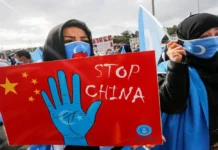
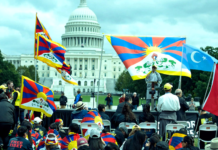
Resistance and the International Response. Despite the overwhelming repression, Tibetan resistance continues, both within Tibet and in the diaspora. Acts of defiance range from peaceful protests and the display of the banned Tibetan flag to self-immolations, a desperate form of protest that has seen over 150 Tibetans set themselves on fire since 2009. Internationally, the Tibetan cause has garnered significant sympathy, with many governments and human rights organizations condemning China’s policies. However, the economic and political clout of the PRC has often muted official criticism. While the United States and some European nations have passed legislation in support of Tibetan rights, concrete actions to hold Beijing accountable have been limited.
The future of Tibet remains uncertain. The Chinese government shows no sign of loosening its authoritarian grip. For the Tibetan people, the struggle to preserve their identity in the face of overwhelming pressure is a daily reality. The “rooftop of the world,” once a sanctuary of spiritualism and unique culture, now stands as a stark testament to the enduring power of an authoritarian state and the resilient spirit of a people determined to resist its erasure.