

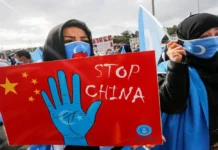

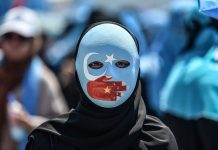














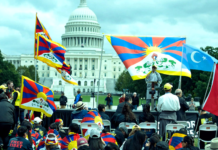









On the evening of July 2, a man carrying a Tibetan flag stopped outside the United Nations headquarters in New York. Moments later, he was engulfed in flames in what authorities and Tibetan activists described as an apparent protest against Chinese rule over Tibet. The 52-year-old, identified by Tibet’s government-in-exile as Lobga Rangzen, later died of his injuries.
The self-immolation took place after China’s Ethnic Unity and Progress Promotion Law came into force on July 1, folding decades of assimilation policy into permanent statute. For Tibet, a region already carrying the lowest freedom score on earth, the law is being read less as a new chapter than as the legal closing of an old argument and, six months on, as the framework now reaching into monasteries, classrooms and the lives of Tibetans who left the plateau decades ago.
Assessments of the law’s implications for Tibet often begin with the region’s freedom rating. The Tibet Autonomous Region has received a score of zero from Freedom House for two consecutive years, the lowest of any territory it assesses, while mainland China scored 9 out of 100.
Nine days before the law took effect, Sikyong Penpa Tsering, political head of the Central Tibetan Administration, warned foreign governments from Dharamshala that the law “may constitute a further step towards genocide” and risked becoming “a death blow to the original constitutional promise of meaningful regional autonomy.”
Beijing
Between those two positions sits Tibet: seven million people, a monastic civilisation, and a government-in-exile that has spent the past year documenting arrests, disappearances, monastery closures and forced relocations in a fifty-nine page annual report. What changed on 1 July was not the substance of that record, but that it now has a permanent legal foundation underneath it.
frames the law rather differently: as a legal safeguard for social harmony across the country’s 56 officially recognised ethnic groups. Deputy justice minister Hu Weilie called it “legitimate, lawful, necessary and a workable legal provision,” dismissing foreign criticism as an attempt to smear a routine exercise of state sovereignty.