















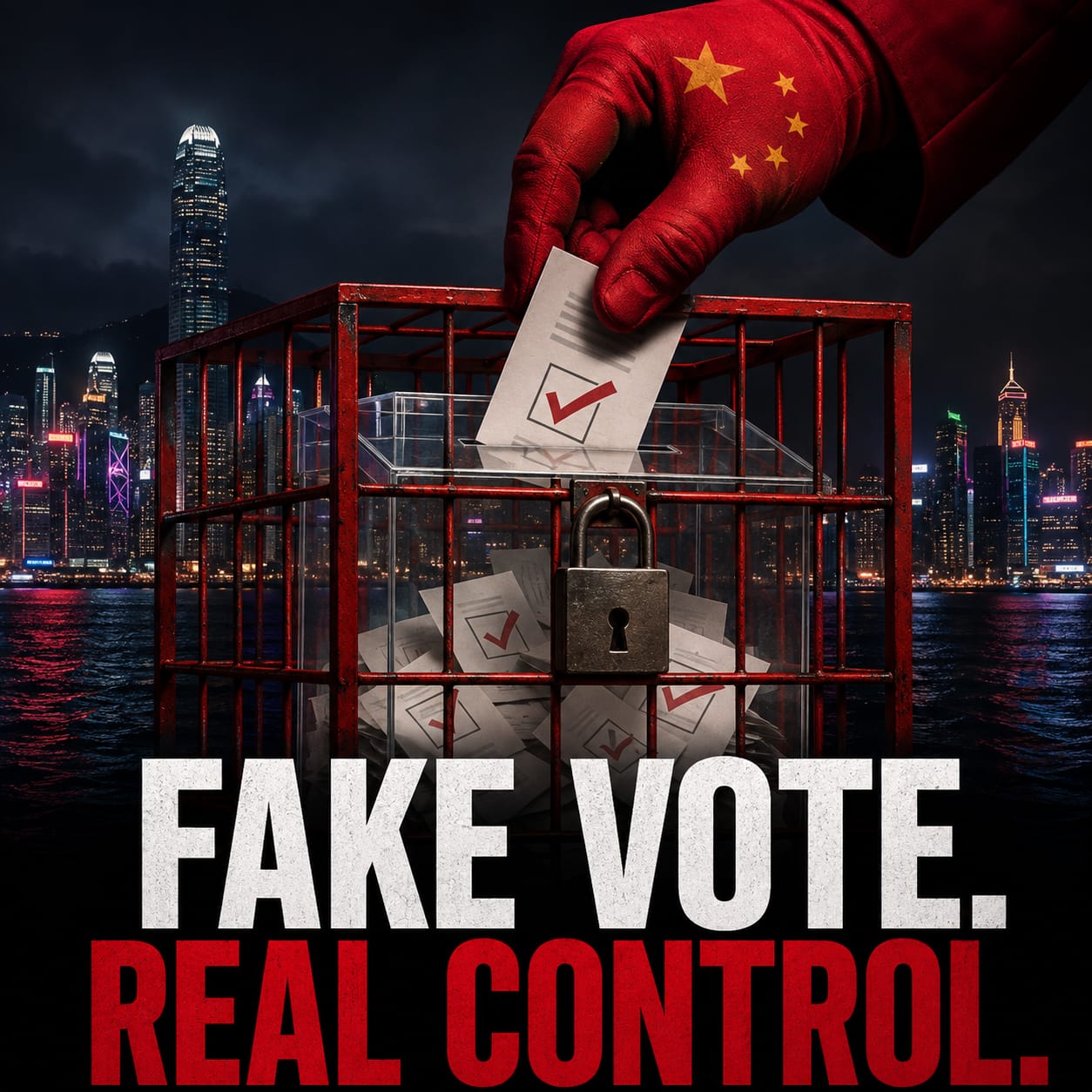
In August 2014, China’s top legislature, the Standing Committee of the National People’s Congress (NPCSC), imposed a framework for Hong Kong’s proposed 2017 Chief Executive election. While the decision formally opened the door to “one person, one vote,” it placed strict limits on who could actually appear on the ballot.
Under the framework, Hong Kong voters would be able to cast ballots in a territory-wide election, but candidates first had to pass through a 1,200-member nominating committee based on the existing Election Committee. Only two to three candidates could ultimately be nominated, and each candidate needed the endorsement of more than half of the committee’s members.
For critics, this created a fundamental contradiction. The public could vote, but it could not freely decide who was eligible to stand. The decisive screening would take place before voters reached the ballot box, giving a Beijing-aligned political establishment substantial influence over the available choices.
Democracy, critics argued, is not simply the act of casting a ballot. It also requires a meaningful right to stand for election, compete on equal terms and offer voters genuine alternatives. By restricting nominations to candidates capable of securing broad support from a committee viewed by pro-democracy forces as heavily influenced by Beijing, the proposed system was condemned as “fake universal suffrage”—a model that preserved the appearance of popular participation while maintaining tight political control.
The controversy exposed a deeper struggle over the meaning of Hong Kong’s promised political autonomy. Beijing described the arrangement as a historic step toward universal suffrage, while opponents argued that universal voting without an open choice of candidates could not constitute genuine democratic competition.
The dispute became one of the central grievances behind Hong Kong’s 2014 Umbrella Movement, as protesters demanded a nomination system that would allow a wider range of political candidates to compete.
The episode demonstrated the central tension at the heart of Hong Kong’s electoral debate: a vote can be universal in form while remaining limited in substance if the choices presented to voters are determined in advance. For critics, the 2017 framework was therefore less about empowering voters and more about preserving Beijing’s control over the political direction of Hong Kong.