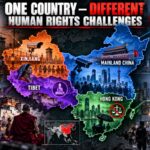

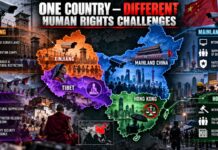

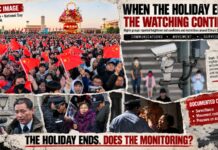















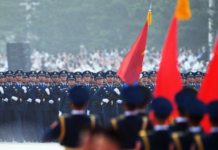









As China marks its 77th National Day on 1 October 2026, official celebrations highlighting national development, economic progress and national unity are unfolding alongside renewed international protests over Beijing’s policies in Tibet, Xinjiang and Hong Kong. While Beijing presents National Day as a symbol of China’s transformation and growing global influence, overseas activists are increasingly using the occasion to draw international attention to human-rights concerns.
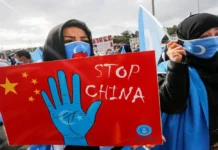
The protests are part of a continuing international movement. On National Day in 2025, around 200 Hong Kongers, Tibetans, Uyghurs, Chinese dissidents and Taiwanese activists rallied near London’s Royal Mint. Demonstrators projected “Say No to CCP” and voiced opposition to Beijing’s domestic policies and expanding influence abroad. The demonstration illustrated how China-related human-rights campaigns have increasingly brought together communities with different political experiences but shared concerns over political freedoms and state control.
The movement gained fresh momentum during Chinese President Xi Jinping’s September 2026 visit to Washington. More than 3,000 Tibetans, Uyghurs, Hong Kongers, Chinese dissidents and other demonstrators reportedly gathered during the visit, raising concerns over human rights and demanding political freedom, religious rights and accountability. The demonstrations showed that criticism of Beijing is no longer confined to developments inside China, but has become an international issue mobilizing diaspora communities and human-rights advocates.
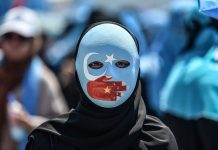
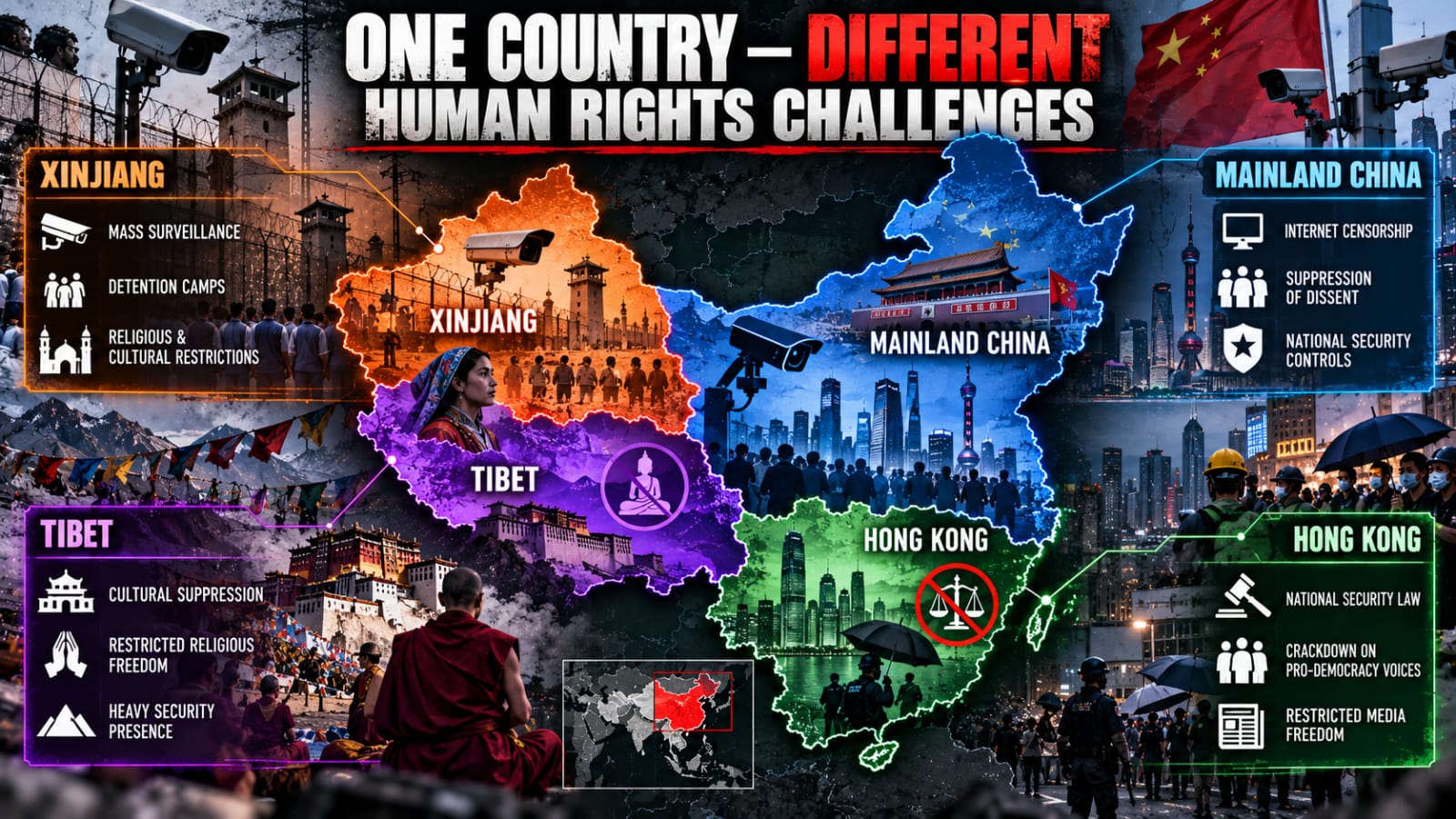
Tibetan activists highlighted restrictions affecting religious practice, language, education and cultural identity, while Uyghur groups drew renewed attention to allegations of mass detention, extensive surveillance and restrictions on religious and cultural life in Xinjiang. Hong Kong activists focused on diminished political freedoms, national-security prosecutions, restrictions on dissent and the narrowing space available for independent political participation.
Hong Kong’s electoral system has become another major focus of criticism. Residents can vote directly for some Legislative Council representatives, but electoral reforms introduced in 2021 established a candidate-vetting system designed to ensure that Hong Kong is governed by “patriots.” Critics argue that voters therefore choose from a politically restricted pool of approved candidates rather than an unrestricted range of political alternatives. Beijing and Hong Kong authorities maintain that these measures safeguard national security, stability and effective governance.
International human-rights organizations have also documented concerns involving censorship, online surveillance, restrictions on peaceful assembly and religious activity, detention of human-rights defenders, and alleged transnational repression targeting activists and diaspora communities abroad. Such allegations have increased concerns that political pressure can extend beyond China’s borders through surveillance, intimidation and attempts to silence overseas critics.
The growing participation of Tibetans, Uyghurs, Hong Kongers and Chinese dissidents in joint demonstrations has consequently given these protests a broader international dimension. Their campaigns seek not only to highlight individual cases of detention or restrictions, but also to keep questions of cultural identity, religious freedom, political participation and freedom of expression on the international agenda.
Chinese authorities reject many international criticisms of their human-rights record and argue that their policies are necessary to protect national sovereignty, security, territorial integrity and social stability. Beijing has also accused some foreign governments and organizations of interfering in China’s internal affairs.
Against these competing narratives, China’s National Day has increasingly become both a celebration of the Chinese state and a focal point for overseas activists demanding justice, freedom, accountability and greater international scrutiny of conditions in Tibet, Xinjiang and Hong Kong. In 2026, the demonstrations surrounding Xi Jinping’s Washington visit have given those demands renewed visibility, ensuring that debates over human rights accompany the celebrations of China’s National Day.