
























October 1950: The Day Tibet’s Fate Changed
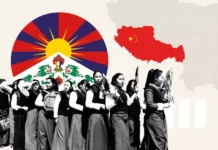
7 October 1950 marked a major turning point in Tibet’s modern history. On that day, Chinese forces crossed into eastern Tibet, opening the Chamdo campaign and setting in motion a chain of military and political developments that would reshape Tibet for decades.
The offensive began as Tibetan and Chinese representatives were still involved in diplomatic efforts. Contemporary United Nations records state that Chinese troops crossed the Dre Chu River at several points on 7 October, while key locations in Kham—including Markham—were rapidly taken. Chinese forces then converged on Chamdo, the administrative centre of Kham.
The Chamdo Campaign
The fighting in eastern Tibet was brief but consequential. Chamdo fell later that month, and the Tibetan commander Ngabo Ngawang Jigme was captured. The campaign exposed the disparity between the two sides and placed the Tibetan government under intense pressure. Archival U.S. records confirm that Chinese forces entered Tibet on 7 October and that the fighting around Chamdo became the immediate military crisis facing Lhasa.
The fall of Chamdo was more than a battlefield defeat. It transformed the diplomatic situation. Tibetan leaders now faced the possibility of further Chinese military advances toward central Tibet, while efforts to secure outside assistance encountered major obstacles.
A cable preserved in the Nehru Archive on 22 October 1950 recorded reports that Riwoche, Dzokangdzong, Markhan and Chamdo had fallen and that the continuing Chinese advance was threatening the prospects for Tibetan negotiations.
From Chamdo to the Seventeen-Point Agreement
The consequences extended far beyond 1950. In March 1951, Jawaharlal Nehru publicly recalled that Chinese military action had begun in eastern Tibet in early October 1950. India’s government protested what it described as the use of force rather than peaceful methods to address the Tibet question. Beijing, in response, maintained that Tibet was an integral part of China and characterized the issue as an internal matter.
In May 1951, Tibetan representatives signed the Seventeen-Point Agreement with the People’s Republic of China. The agreement formally established Chinese sovereignty over Tibet while setting out provisions concerning Tibetan political, religious and administrative institutions.
The events that followed would profoundly affect Tibetan society. Chinese political authority expanded, while Tibet experienced major changes in its institutions, economy, religious life, education, communications and social structure. These developments became increasingly contentious, culminating in the upheavals of the late 1950s and the transformation of Tibetan political and cultural life.
Why 7 October Still Matters
The significance of 7 October 1950 lies not only in the military events of the Chamdo campaign. It marks the beginning of a period in which Tibet’s political status, governance and relationship with China underwent fundamental change.
For Tibetans and historians, the date remains a point of remembrance and debate—one that raises enduring questions about sovereignty, self-determination, cultural identity, religious freedom and the preservation of historical memory.
7 October 1950 was not simply another date in the Cold War era. It was a turning point whose consequences continue to shape Tibet’s history and identity today.
#Tibet1950 #RememberTibet #TibetHistory