




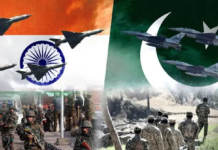

















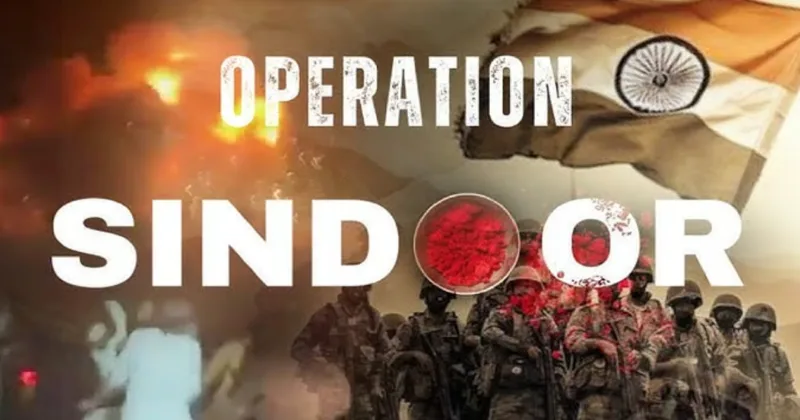
Operation Sindoor has not only redrawn red lines when it comes to India’s response to acts of terrorism, but also offered some key military lessons, including joint and cohesive use of air power, bolstering of drone technology and building a robust communication system, say experts.
Recalling the decisive military action launched exactly a year ago on the intervening night of May 6-7, several defence and strategic affairs experts concurred that the military operation also emphasised that future conflicts would play out not only in airspace, but also in cyberspace and information and cognitive domains.
And, indeed, the Indian military wasn’t just battling against a barrage of hostile drones that came from across the western border, from Leh to Sir Creek, in multiple waves during the nearly four-day conflict, but also countering an intense misinformation campaign that sought to damage the morale of the forces and the masses.
Air Commodore Gaurav M Tripathi (retired), who also played a role during the operation, while acknowledging the criticality of air power in deciding the outcome of a conflict, underlined that in any future scenario, “combined air power” of the three services should be leveraged so that it can work cohesively against a “capable adversary.” “During (Operation) Sindoor, we saw a mass of drones used by Pakistan. Most of them were harmless, just to engage Indian weapons and munitions so that attack drones could come in later.
“But the enemy is smart. Next time, what they will send will be hardened drones, which will probably be more difficult to jam… have better navigation at the end, might not need GPS, (and) they might have electro-optical homing devices. And, they will probably collaborate as a swarm,” Air Commodore Tripathi told
The former IAF officer, who took an early retirement last August, has flown multiple kinds of fighter jets and commanded a Hawk Mk 132 squadron, and also served as a chief operations officer of a fighter base.
In the IAF, there has already been some investment in anti-drone capabilities, “but anti-drone capabilities will really have to be proliferated, and cover all important points,” he said, on the military lessons learned from the operation.
The former air officer praised the S-400 and Akash weapon systems, BrahMos and other missiles, in securing the Indian skies and dealing a potent blow to the adversary, which also allowed Indian fighter jets to play their role.