























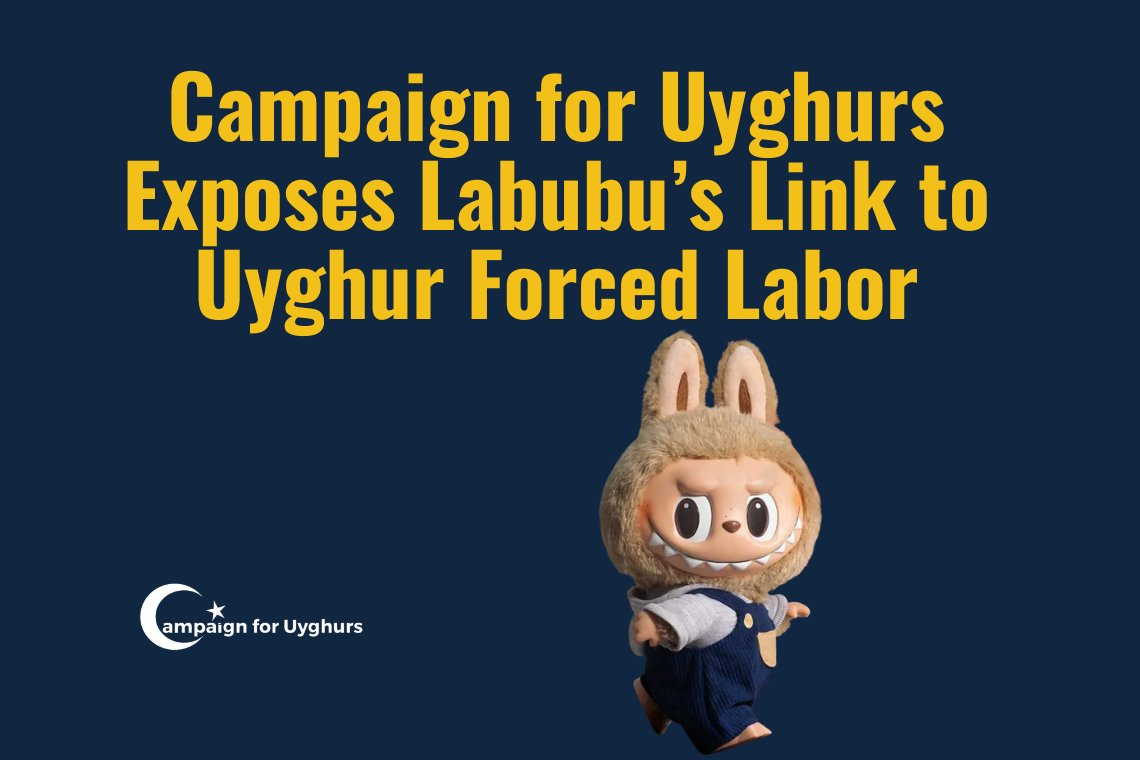
Over the past two years, a furry monster with bunny ears and a vicious line of serrated teeth became the subject of a global craze, as shoppers waited hours in line or paid hundreds or thousands of dollars for the most coveted Labubus.
The boom turned Pop Mart, the Chinese company that sells Labubus, into a global brand. But a test of the doll — the results of which The New York Times has independently confirmed — showed that clothing on certain Labubu dolls contains cotton from the Xinjiang region of western China, which the U.S. government has banned because of its association with forced labor.
For businesses like Pop Mart, selling products that contain cotton banned in the United States could have severe consequences. Companies found in violation of a 2021 law that restricts imports from Xinjiang can be put on a blacklist that bans all their products. The ban does not apply to importers that can prove goods were not made with forced labor.
A spokeswoman for Pop Mart said that it would conduct an investigation into the presence of Xinjiang cotton in its supply chains, and that the company held itself and its suppliers to “the highest standards.” Pop Mart said that only a small percentage of its dolls used cotton for apparel, and that it was working on a plan to use alternative materials, rather than cotton, in its products for the U.S. market.
Nonprofit groups have submitted information about Pop Mart’s use of cotton from Xinjiang and other alleged labor violations at its Chinese factories to officials at U.S. Customs and Border Protection, which would be responsible for enforcing an import ban.
The agency did not respond to requests for comment.
A test of the cotton in a Labubu was commissioned last year by the Campaign for Uyghurs, a Washington-based nonprofit that opposes the persecution of Uyghurs, a mostly Muslim ethnic group concentrated in Xinjiang.
That test was conducted in June by Testrigin Technology Center Limited, a product testing facility in Taiwan. Isotopes in cotton vary depending on where it is grown. The Testrigin lab found that samples from a Labubu doll contained cotton grown in Xinjiang.
The Times bought 20 Labubus that were listed as containing cotton late last year from various retailers and had them independently examined to identify the source of the cotton. Independent experts examined the dolls for the Times but asked not to be identified because of the sensitivity of the topic.
Pieces of clothing from 16 of the 20 dolls were identified as containing cotton from Xinjiang, mainly their T-shirts. The dolls themselves are primarily made of polyester, but the outer part of some of the dolls, including the clothes, are described as containing cotton.The dolls that contained Xinjiang cotton were bought from Amazon, eBay, Shein, AliExpress and other retail channels, as well as directly from Pop Mart. They were from the Labubu lines called Fall in the Wild and Flip With Me. While counterfeit Labubu dolls, known as Lafufus, have proliferated online, each of the dolls tested contained a QR code that allowed The Times to verify it as an authentic product.