























A fatal tank accident during a Bangladesh Army field-firing exercise has renewed scrutiny of Chinese-origin military equipment operated by Dhaka and several other foreign militaries.
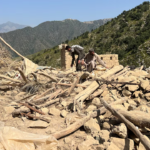
The incident occurred on September 9, 2026, at the Hathazari firing range in Chattogram, where a T-59 tank suffered a gun malfunction during live firing. Two Bangladesh Army soldiers were killed and an officer was critically injured.
The Bangladesh Army has not publicly identified the exact tank involved beyond the available reporting on the incident, and no official conclusion has yet established whether the malfunction resulted from a manufacturing defect, ammunition problem, maintenance failure or another technical factor. The accident, however, has brought renewed attention to Bangladesh’s longstanding dependence on Chinese military platforms and to earlier reports concerning the reliability and sustainment of some Chinese-origin defence systems.
China has been one of Bangladesh’s most important defence suppliers for decades. Chinese equipment is present across the Bangladesh Army, Air Force and Navy, including tanks, armoured vehicles, aircraft and naval platforms.
The Bangladesh Army’s armoured fleet has included Type 59 derivatives, Type 69 tanks, MBT-2000 main battle tanks and newer VT-5 light tanks. Reports over the years have raised concerns about firing-related issues, availability of spare parts, ammunition and mechanical problems involving some Chinese-origin equipment.
A T-59G Durjoy was involved in another serious incident during trial firing in Chattogram in May 2024. The latest Hathazari accident has therefore revived questions about the operational condition and long-term maintenance of ageing as well as modernised Chinese-supplied armoured platforms.
Similar concerns have emerged outside Bangladesh.
In December 2025, a Chinese-made VT-4 main battle tank operated by the Royal Thai Army suffered a serious gun-barrel failure during live firing near the Cambodian border, injuring crew members. The VT-4 is marketed as a modern export tank fitted with a 125mm main gun, digital fire-control systems and advanced electronics.
Chinese armoured vehicles operated by countries including Nigeria and Kenya have also faced reported criticism at different times over maintenance, protection and operational limitations. Such incidents do not establish that an entire class of Chinese weapon systems is defective, but they have contributed to wider scrutiny of the performance and support arrangements associated with some export platforms.
Questions have also extended beyond armoured vehicles.
Algeria has encountered reported operational difficulties with Chinese CH-4 unmanned aerial vehicles, while Chinese drones supplied to customers in the Middle East have faced criticism concerning reliability and performance under harsh environmental conditions.
Desert heat, dust, sustained operational use and extended deployment cycles can impose stresses that are difficult to replicate during manufacturer demonstrations or controlled acceptance trials. For defence customers, the ability of a system to remain serviceable over years of use can be as important as its performance specifications at the time of purchase.
Bangladesh’s experience is significant because of the scale of its defence relationship with China.
Beijing’s attraction as an arms supplier has traditionally rested on a combination of competitive pricing, relatively accessible financing and the availability of complete weapons packages for countries unable or unwilling to purchase more expensive Western equipment.
But defence procurement does not end with acquisition.
Modern military platforms require dependable spare-parts chains, trained technical personnel, compatible ammunition, software support, maintenance infrastructure and sustained access to the original manufacturer. Weakness in any of these areas can significantly reduce operational availability.
Once a military becomes heavily dependent on a particular supplier, changing course can also become extremely costly. Training systems, maintenance facilities, ammunition stocks and logistics networks are often built around equipment from the original supplier. This creates long-term dependence that extends well beyond the initial purchase contract.
Bangladesh has also faced concerns involving Chinese-origin aviation equipment.
On July 21, 2025, a Chinese-made FT-7BGI fighter trainer of the Bangladesh Air Force crashed into a school campus in Dhaka, killing at least 35 people, many of them children.
The crash became one of Bangladesh’s most serious aviation disasters in recent years.
No aircraft accident can be attributed to its country of manufacture without a technical investigation. Aviation accidents may result from mechanical failure, maintenance deficiencies, human error, operating conditions or a combination of causes. Nevertheless, accidents involving major imported platforms inevitably lead defence establishments to examine questions of design reliability, maintenance practices, availability of components and fleet age.
Reported concerns involving Chinese-supplied naval equipment and components have added another layer to the debate in Bangladesh.
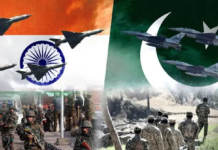
The wider discussion over Chinese military exports gained additional attention after the India-Pakistan confrontation in May 2025 and India’s Operation Sindoor.
Pakistan operates a substantial inventory of Chinese-origin military equipment, including combat aircraft, radars, drones and air-defence systems. During the confrontation, India carried out precision strikes against Pakistani military targets, including airbases and other defence infrastructure.
Those strikes triggered debate among military analysts over the performance of Pakistan’s integrated air-defence network and the effectiveness of Chinese-origin systems under combat conditions.
Any assessment requires caution. No air-defence system can guarantee complete protection, particularly against coordinated attacks involving stand-off weapons, drones, electronic warfare and multiple attack vectors. Even advanced Western and Russian air-defence networks have been penetrated during recent conflicts.
Nevertheless, combat performance remains the most demanding measure of a military system.
For an air-defence network, published range and detection specifications matter far less during an actual attack than its ability to detect, classify, track and intercept incoming threats under electronic and operational pressure.
The May 2025 confrontation consequently provided an unusual real-world environment in which Chinese-origin platforms used by Pakistan could be assessed against a capable adversary.
The same confrontation also strengthened attention on India’s expanding indigenous defence industry.
The BrahMos supersonic cruise missile emerged prominently in reporting surrounding Operation Sindoor. Jointly developed by India and Russia, BrahMos has gradually shifted from being primarily a symbol of India-Russia defence cooperation to becoming an operational and export-oriented weapon increasingly supported by India’s domestic manufacturing ecosystem.
Its reported use against Pakistani military targets added to its combat profile at a time when India is seeking to expand defence exports.
Operational credibility carries considerable weight in the international arms market. Governments evaluating major defence purchases look not only at range, speed, payload and electronic systems but also at battlefield performance, maintainability, ammunition availability, spare-parts support and the ability of manufacturers to sustain fleets over decades.
India’s Advanced Towed Artillery Gun System, or ATAGS, is another platform receiving international attention.
Developed in India with substantial private-sector participation, including involvement from the Kalyani Group, ATAGS forms part of New Delhi’s wider push to build a stronger domestic defence-industrial base.
Armenia’s expanding defence relationship with India has become an important example of that shift. Yerevan has purchased Indian military equipment and has continued exploring additional acquisitions, reinforcing India’s efforts to establish itself as a more significant international defence supplier.
The contrast between Chinese and Indian defence exports should, however, be approached carefully.
China possesses one of the world’s largest military-industrial complexes and produces a wide range of sophisticated aircraft, missiles, warships, drones and armoured systems. Equipment used by the People’s Liberation Army also cannot automatically be judged on the basis of problems reported in individual export models.
Nor are technical failures unique to China.
American, Russian, European and Indian defence systems have all suffered accidents, reliability problems and combat losses. Military platforms are complex machines operating under extreme mechanical and environmental stress.
What matters for defence customers is whether problems remain isolated or begin forming a wider pattern, and how effectively manufacturers identify faults, provide replacements and maintain long-term support.
This is where repeated reports concerning tanks, aircraft, drones, ammunition and naval components become relevant.
China’s ability to offer sophisticated weapons at competitive prices has helped it build a major presence across Asia, Africa and the Middle East. But the long-term strength of that export model will increasingly depend on more than acquisition cost.
Reliability, maintenance support, component quality, spare-parts availability and performance under operational conditions are becoming central considerations for governments assessing future purchases.
The September 9 Hathazari accident does not, by itself, establish a systemic defect in Chinese military hardware. It does, however, add another serious incident to a growing body of cases that defence planners are likely to examine closely.
For military personnel, the distinction is more than commercial or geopolitical.
A tank, aircraft, missile system or warship is ultimately expected to perform when lives depend on it. Technical specifications and exhibition demonstrations may help secure a contract, but the lasting reputation of military hardware is decided through years of operational service — and, ultimately, in combat.