






















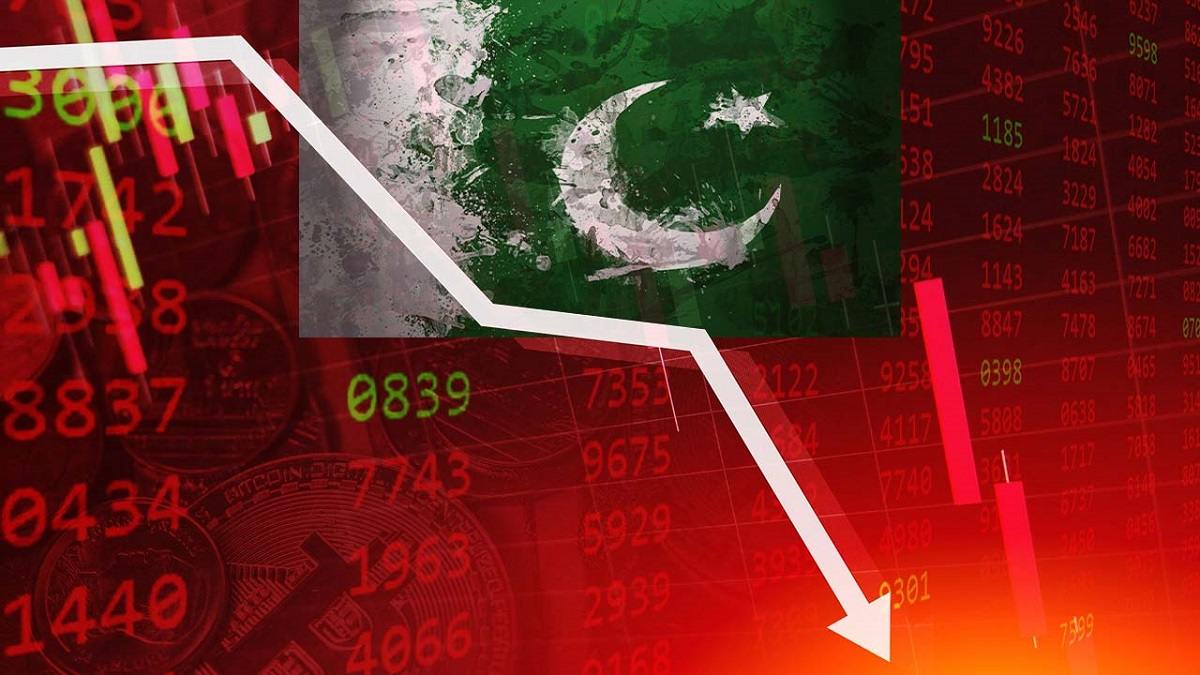
Pakistan’s economic crisis is not simply a story of bad policies or temporary financial shocks. It is a deeper political-economy trap in which decisions that appear rational in the short term repeatedly make the economy more fragile in the long term.
The paradox is straightforward: every major actor has incentives to protect its immediate interests, yet the combined result is an economy that struggles to escape recurring crises.
Pakistan has achieved a degree of macroeconomic stabilisation under its current IMF programme. The IMF’s latest country data projects real GDP growth of around 3.6% in 2026, while the State Bank of Pakistan expects growth to recover gradually, within a 3.5–4.5% range in FY27. But stabilisation is not the same as transformation.
The central question is therefore not whether Pakistan can avoid the next crisis. It is whether it can change the incentives that keep producing the next crisis.
The Prisoner’s Dilemma at the Heart of Pakistan’s Economy
In the classic prisoner’s dilemma, two individuals acting rationally in their own interests can produce an outcome that is worse for everyone.
Pakistan faces a similar problem.
Governments want to survive politically. Businesses want protection from taxes and regulation. Powerful interest groups want subsidies and exemptions. State-owned enterprises resist restructuring. Consumers want cheaper electricity, fuel and food. The security establishment wants large and predictable resources. Politicians want to avoid reforms whose costs are immediate while their benefits may take years to materialise.
Individually, these choices can be understandable.
Collectively, they become economically destructive.
The result is a system where everyone has an incentive to postpone adjustment—and the country eventually pays a much higher price for postponement.
IMF Bailouts Become a Safety Valve
The IMF has repeatedly become the emergency mechanism that prevents an external-payment crisis from turning into outright economic collapse. Pakistan’s current 37-month Extended Fund Facility was approved in September 2024, and the programme is explicitly aimed at building resilience and enabling sustainable growth.
The problem is that external financing can solve a liquidity crisis without automatically solving the structural causes behind that crisis.
Pakistan therefore enters a familiar cycle:
Balance-of-payments pressure → IMF programme → fiscal tightening → temporary stabilisation → political resistance → incomplete reforms → renewed vulnerabilities.
The IMF itself continues to emphasise structural reforms involving governance, inefficiencies, market distortions, regulation, productivity and private-sector development.
That is the crucial distinction: Pakistan does not merely need more foreign exchange. It needs an economic structure capable of generating foreign exchange, investment and productivity without repeatedly requiring emergency assistance.
The Tax Trap
One of Pakistan’s biggest structural weaknesses is its limited tax base.
Increasing taxation is politically difficult when large segments of the economy are under-taxed or benefit from exemptions. Yet reducing taxation without expanding the base leaves the government with inadequate revenue.
So governments often choose the politically easier option: raise taxes on the already documented and relatively immobile parts of the economy.
That can discourage formalisation and investment while leaving deeper structural weaknesses untouched.
The IMF has continued to push fiscal consolidation and stronger revenue mobilisation, while Pakistan has committed to a primary surplus target of 2% of GDP for FY2027.
But fiscal arithmetic alone cannot create a productive economy.
A sustainable solution requires a broader tax base, better administration, fewer distortions and greater economic formalisation.