






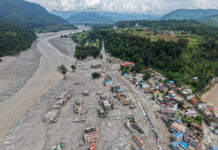


















It’s been more than a week since deadly flash floods killed hundreds and left thousands missing along the China-Nepal border — and practically nothing is known about the victims on the Chinese side.
The disaster, which has killed more than 1,000 people and left more than 4,500 missing in the two countries, has once again highlighted China’s tight grip on information surrounding disasters and its efforts to control what is — and is not — said about them.
The death toll is updated only once every few days, and access to the disaster area has been granted only to top-level state media outlets, which have avoided broadcasting the names or faces of the missing and their relatives in favor of videos showing the logistics of delivering aid or rescue dogs working hard.
Meanwhile, at least 10 people across China have been detained or fined for social media posts that questioned aspects of the official narrative.
It’s a sharp contrast to the Nepalese side of the border, where officials have regularly updated lists of dead and missing people, while journalists and social media posts have documented the unfolding disaster and the recovery effort.
Grieving families were made visible, giving voice and shape to those who were lost, as people held symbolic burial rites or went on their own journeys to look for loved ones.
After an update Sunday, China did not release new figures until Wednesday, when it said 21 people had been killed and 541 were missing in Tibet, including 261 foreigners from 23 countries. Late Friday, it raised the death toll to 31 and said 531 people remained unaccounted for.
Nepal has allowed up-close reporting in disaster-struck areas
Nepal’s government has published continuous updates on rescue efforts, including creating a website listing the names of those rescued. The army has published footage of rescues via helicopter, and of people being pulled out of the hydropower tunnels, completely caked in mud.
Nepal has shared near daily updates about rescued people and allowed journalists, both domestic and foreign, to report from the area.
Journalists have been able to visit disaster-struck sites. While the government in Nepal did issue some restrictions, such as requiring journalists to provide accreditation, reporters were ultimately allowed to report from government sites like aid camps where rescued survivors are temporarily being kept, and visit mass burial sites.
Access to the Chinese disaster zone is restricted to state media
In contrast, access in China was limited for all but a few journalists from China’s two state media outlets, Xinhua News and CCTV.
The Associated Press requested access to affected areas soon after the disaster struck, but has not been given permission to visit the area.
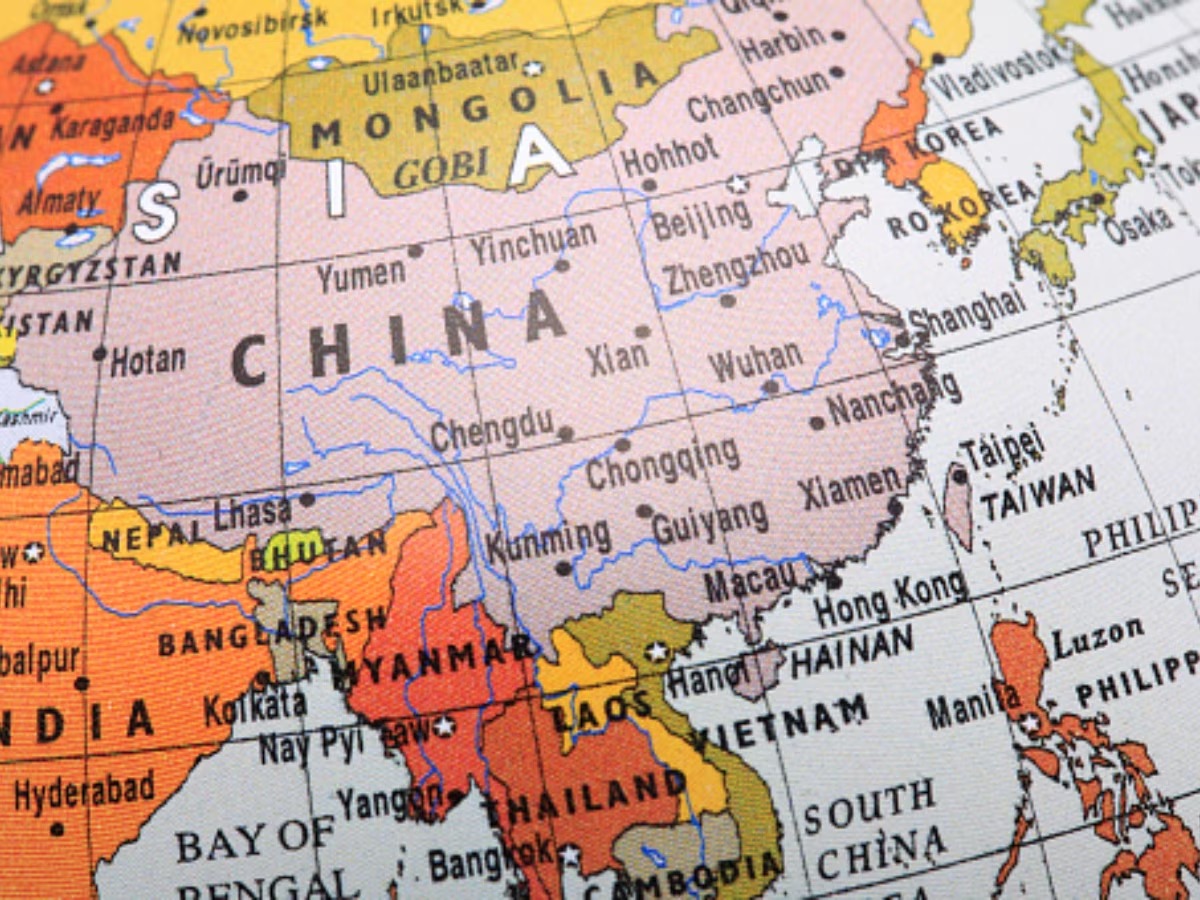
China often tries to control information about disasters, but in the tightly controlled region of Tibet the flow of information has been especially limited.
Tibet is a Chinese autonomous region that has gone through cycles of protest, unrest and government repression since China asserted control over the region in 1951. Today, the region is the focus of extensive central government investment and poverty alleviation efforts. Communications are also heavily monitored and restricted, making it difficult for Tibetans to communicate freely with people outside China. Travel to Tibet requires special government permission for all foreigners, especially journalists, even if they are fully accredited to work in China.
CCTV has focused on the official response, highlighting President Xi Jinping’s instructions for disaster relief and sharing dispatches focused on heroics, such as rescuers being flown in via drone, hanging by a rope, or police comforting a family member who lost a loved one. Xinhua News has issued official reports about the disaster and technical dispatches about the science of the glacial lakes.