



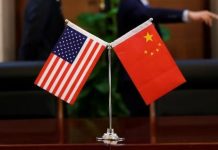











For families whose loved ones have spent years behind bars in China, U.S.-China diplomacy is about much more than trade, security, or geopolitical competition. It is about people they love and the hope that those people will one day come home. That is the message Rep. Chris Smith, R-N.J., is bringing to President Donald Trump and Secretary of State Marco Rubio. In a new letter, Smith is urging the administration to make the release and humane treatment of prisoners and detainees a direct part of its discussions with Chinese President Xi Jinping. Smith, who chairs the Congressional-Executive Commission on China, sent the letter after two congressional hearings in late September focused on people imprisoned or detained by Chinese authorities. The cases include Christian pastors and worshippers, Uyghur activists, Falun Gong practitioners, Hong Kong media entrepreneur Jimmy Lai, and American citizens who have spent years in Chinese custody. “These are people sons and daughters, fathers and mothers, brothers and sisters whose families have spent years waiting and pleading for their loved ones to come home,” Smith wrote. He is asking Trump and Rubio to raise individual cases directly with Xi and seek their release. Where appropriate, he also wants the administration to push for medical or humanitarian transfers, particularly for prisoners facing serious health problems. The timing is significant. Trump and Xi met at Joint Base Andrews on Sept. 23, 2026, before continuing their discussions at the White House. Their meetings created an opportunity to address issues beyond trade and strategic competition including the treatment of prisoners, religious believers, and other people detained by Chinese authorities.
Religious Believers Caught in China’s Crackdown
Among the cases highlighted by Smith are Christian leaders connected to Zion Church and Light of Zion Church. According to his letter, several leaders remain imprisoned after refusing to register their churches with Chinese authorities and submit to government monitoring. For Christians and other religious groups operating outside China’s state-approved religious system, these cases illustrate the risks of practicing their faith independently of government control. Smith points to Pastor Ezra Jin as an example of what direct presidential engagement can accomplish. During an earlier meeting with Xi, Trump reportedly raised Jin’s imprisonment with the Chinese leader. Jin had been detained for operating a church that was not approved by the Chinese government and was later released. Smith is now asking the administration to give similar attention to other prisoners whose families are still waiting for their loved ones to return home.
Jimmy Lai’s Health Raises Humanitarian Concerns
Another case receiving renewed attention is that of Jimmy Lai, the Hong Kong media entrepreneur who was convicted under Hong Kong’s national-security laws and remains imprisoned. Smith’s letter draws attention to Lai’s health and to the difficult circumstances facing his family. According to the material cited in the letter, Lai has served six years of a 20-year sentence, while his eldest daughter is undergoing cancer treatment in the United Kingdom. For Smith, Lai’s situation is about more than the political and legal disagreements surrounding his case. It is also about basic humanitarian concerns. Smith is urging the administration to consider whether prisoners with serious medical conditions should receive medical release or humanitarian transfers.
Americans Have Been Waiting, Too
The letter also highlights the cases of American citizens Dawn Michelle Hunt and Nelson Wells Jr., who have reportedly spent more than a decade imprisoned in China. Smith has raised concerns about the circumstances and procedures surrounding their detention and is calling for their cases to receive direct attention from the U.S. government. For their families, the issue is deeply personal. While Washington and Beijing negotiate over trade, technology, security, and other major issues, relatives of detained Americans continue to wait for answers and for the possibility of seeing their loved ones again.
Putting People at the Canter of Diplomacy
Smith’s appeal is ultimately a request that human rights remain part of high-level U.S.-China diplomacy. The relationship between Washington and Beijing involves enormous and complicated disagreements. But behind those disagreements are individual people and families who have spent years living with uncertainty. A prisoner is not simply a name in a diplomatic file. A detainee may be someone’s parent, child, spouse, sibling, or friend. For families who have waited years, the outcome of a diplomatic conversation can have consequences that reach far beyond government statements or negotiations. That is why Smith is asking Trump and Rubio to use their direct engagement with Xi to seek concrete action for people who remain behind bars, particularly those facing serious medical or humanitarian concerns. Whether Beijing responds to these appeals remains uncertain. But for the families involved, the issue is painfully simple: they want their loved one’s home. And behind every diplomatic discussion about prisoners is a family still waiting for that day.