





















The momentum of Taiwan’s elections is apparent at any campaign event across the country, with seas of flags, the thunder of plastic horns and the sheer volume of civic participation across age, gender and ethnic origin.
Although global analysts often label Taiwan’s democracy as young and messy, the country has come far since emerging from four decades of authoritarian one-party rule to hold its first direct presidential election in 1996.
Regardless of which party or candidate wins on Nov. 28, the real victor in these local elections is Taiwan’s democratic growth and institutional resilience. Despite extensive Chinese malign influence operations and intimidation from Beijing, the ability to hold fiercely contested, highly transparent local elections is powerful proof of democratic maturity.
While democracies in Europe — and even more so in Asia — face setbacks, Taiwan remains a progressive beacon for democracy in the region. Its resilience is stark in the face of authoritarian pressure aimed at dictating its future.
Despite its strength in resisting external pressure and preserving its sovereignty and distinct identity, Taiwan’s political landscape remains deeply divided by competing visions of the country’s future. Three political identities have produced the broad green, blue and white camps. They coexist, and while disputes erupt from time to time, they largely respect voters’ mandates through free and fair elections.
The green camp is led by the Democratic Progressive Party (DPP) and smaller Taiwan-centric parties. It emphasizes progressive local policies, urban revitalization and the defense of Taiwanese self-determination and sovereign identity.
China-friendly KMT
The blue camp is led by the Kuomintang (KMT), which presents its decades of institutional experience and administrative governance as its strength. Although its leaders’ China-friendly stance remains a liability — particularly under party Chair Cheng Li-wun (鄭麗文) — the KMT focuses on practical issues from housing to childcare. It also relies on an extensive network of local officials and politicians built during nearly half a century of one-party rule.
The newer white camp, the Taiwan People’s Party (TPP), draws supporters dissatisfied with both the green and blue camps. Its advantage is that it has never governed at the central-government level, allowing it to appeal to politically inactive, independent and swing voters seeking an alternative to traditional two-camp politics.
Despite these distinct camps, their campaigns share festive community rallies, night-market walks and creative public forums. Political rallies in Taiwan are treated as open, accessible civic festivals rather than sources of dangerous clashes or unrest. It is not uncommon to see supporters of rival camps attend competing rallies, mingle with opponents and politely explain why they back their own candidate.
This year, one candidate has transformed grassroots campaigning. Puma Shen (沈伯洋), the DPP’s Taipei mayoral candidate, has generated near-constant headlines with his “ocean wave” (洋流) campaign.
What began as an underdog effort trailing incumbent KMT Mayor Chiang Wan-an (蔣萬安) by double digits in some polls became a viral, supporter-led movement. Volunteers independently designed, printed and distributed orange ocean-current ribbons and posters. The campaign later reprinted ribbons and distributed them at set times to long lines of supporters.
Shen’s unconventional tactics did not stop with ribbons. The ocean-wave phenomenon was on full display at Nov. 15’s riverside rally in Guandu, which drew thousands of supporters and a grassroots flotilla of dragon boats, stand-up paddleboards and sightseeing vessels.
Democratic discussion thrives
The motif has spread to other DPP campaigns, with local candidates distributing ocean-wave ribbons alongside their own similarly themed designs. Equally notable is Shen’s embrace of street-corner soapbox sessions and his use of pop culture, Japanese fashion and anime to reach voters. He demonstrates that democratic discussion thrives when leaders are accessible, transparent and genuinely willing to listen.
Younger voters are driven largely by practical concerns such as wage growth, housing, transportation costs and childcare. Meanwhile, older voters remain shaped by historical loyalties and views on cross-strait relations.
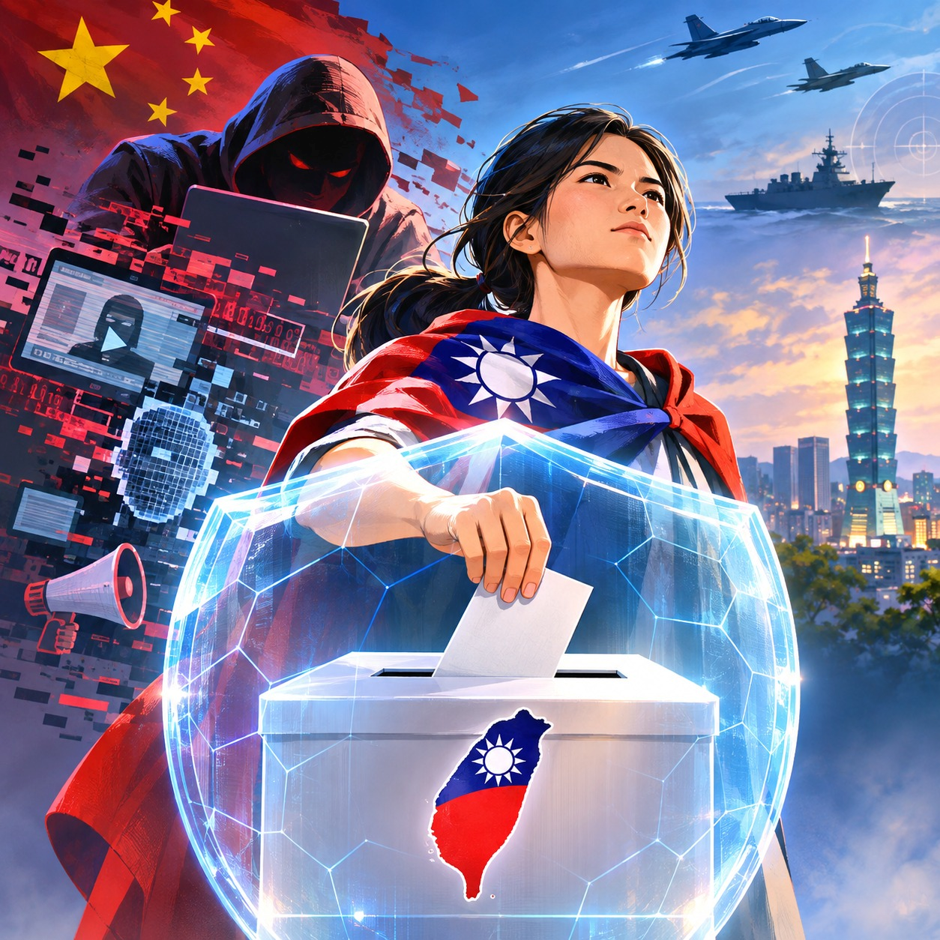
China exploits these divisions by amplifying and creating false narratives to sow discord among voters. The government recently told Meta that it had identified nearly 2,700 China-linked accounts suspected of participating in an influence campaign, including about 260 accounts that disseminated more than 2,150 AI-generated videos.
These efforts accompany Beijing’s broader gray-zone tactics, including cognitive warfare and pressure intended to intimidate voters away from candidates it opposes.
Still, the nation’s democracy has shown resilience for more than three decades. Chinese influence operations have failed to determine many election outcomes, as shown by the electoral successes of presidents Lee Teng-hui (李登輝), Chen Shui-bian (陳水扁), Tsai Ing-wen (蔡英文) and incumbent Lai Ching-te (賴清德).
Voters have developed considerable societal immunity to information warfare through civil society initiatives, transparency platforms and a shared determination that their way of life is non-negotiable. While international coverage often frames Taiwanese elections around the “China factor,” voters more often decide based on local, tangible issues rather than Beijing’s preferences.
What is certain is that on the evening of Nov. 28, losing candidates will concede, power will transition or consolidate peacefully, and democracy will move forward. External Chinese coercion will backfire, and the nation will once again demonstrate the vibrant, mature democratic process its people continue to refine with every election.