
























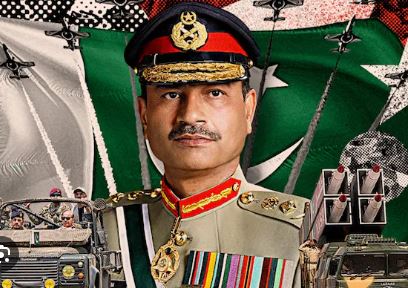
In Pakistan, a fourth “coup” is seemingly underway. It’s the quietest one, and unlike most coups—takeovers at midnight, or with guns. This time, it’s “constitutional” with the help of a puppet regime. This soft coup would hollow out Pakistan further from within. The proposed 27th Constitutional Amendment, which was passed by the Senate on Monday, legalises military supremacy, placing the chain of command, nuclear authority, and even the judiciary under Field Marshal Asim Munir’s control.
Munir’s power grab is significant for New Delhi because it creates a dangerous asymmetry with India, where the civilian leadership has the operational control of the defence forces.
Pakistan has been scarred by three military coups since its formation, by Generals Ayub Khan (1958), Zia-ul-Haq (1977) and Pervez Musharraf (1999). But a fourth “coup”, being staged by Asim Munir, might be the boldest consolidation of power by any military leader in Pakistan—something which both Zia and Musharraf couldn’t pull off.
In this “constitutional coup d’etat”, Munir has an accomplice aiding him in Pakistan’s “reform”—Prime Minister Shehbaz Sharif.
The Constitutional Amendment seeks to restructure the military hierarchy under Munir and eliminate rival positions. It reportedly also grants five-star generals like himself immunity from all kinds of legal proceedings, according to Pakistani journalist Imran Riaz Khan
A distinguished Pakistani lawyer, Makhdoom Ali Khan, writing for the Karachi-based daily Dawn, described the amendment as “a parallel authority insulated from the very rule of law it is sworn to defend”.
WHY ASIM MUNIR’S SILENT COUP IS DANGEROUS?
While protests have taken place across Pakistan over the proposed amendments, the ruling establishment seems to be pliant.
The past coups in Pakistan were straightforward. General Zia ul Haq seized power in 1977 by toppling Zulfikar Ali Bhutto’s civilian regime amid street protests, imposing martial law that lasted a decade and Islamised the judiciary.
General Pervez Musharraf followed suit in 1999, ousting Nawaz Sharif in a non-violent coup, only to face impeachment and exile in 2008.
The coups were justified by Haq and Musharraf as moves to fight corruption or restore stability in Pakistan, but they were eventually undone, and civilian rule returned.
Munir’s gambit, however, is subtle, and much more dangerous. It uses the same parliamentary process that Musharraf and Zia once undermined, turning Shehbaz Sharif—whose party, the Pakistan Muslim League (Nawaz), has often had a tense relationship with the army—into an accomplice.
PAKISTAN ARMY WILL TAKE OVER PAKISTAN, LEGALLY
The bill, amending Article 243 of the Constitution, formalises the army’s de facto dominance, shifting control from the president and cabinet to a new Chief of Defence Forces (CDF)—a role tailored for Munir. Notably, Munir was set to retire on November 28.
“This amendment appears tailored to benefit a specific individual rather than to strengthen the defence structure,” said Lt Gen Asif Yasin Malik (Retd), a former defence secretary, reported the Dawn.
The changes would break the balance between Pakistan’s military branches that has existed since the 1973 Constitution.
Article 243 currently vests supreme command in the President, with operational control under the federal government.
The amendment scraps this, creating the CDF as the paramount authority over the army, navy, and air force. The amendment also coincides with the November 27 retirement of the current Chairman Joint Chiefs of Staff Committee (CJCSC), General Sahir Shamshad Mirza, dissolving that post entirely.
Supporters, including government insiders, tout it as modernisation born of the beating Pakistan took during Operation Sindoor. Pakistani Defence Minister Khawaja Asif confirmed to Geo News that “defence requirements have evolved”, emphasising “mutual consultation” between the government and the Pakistani military.