

















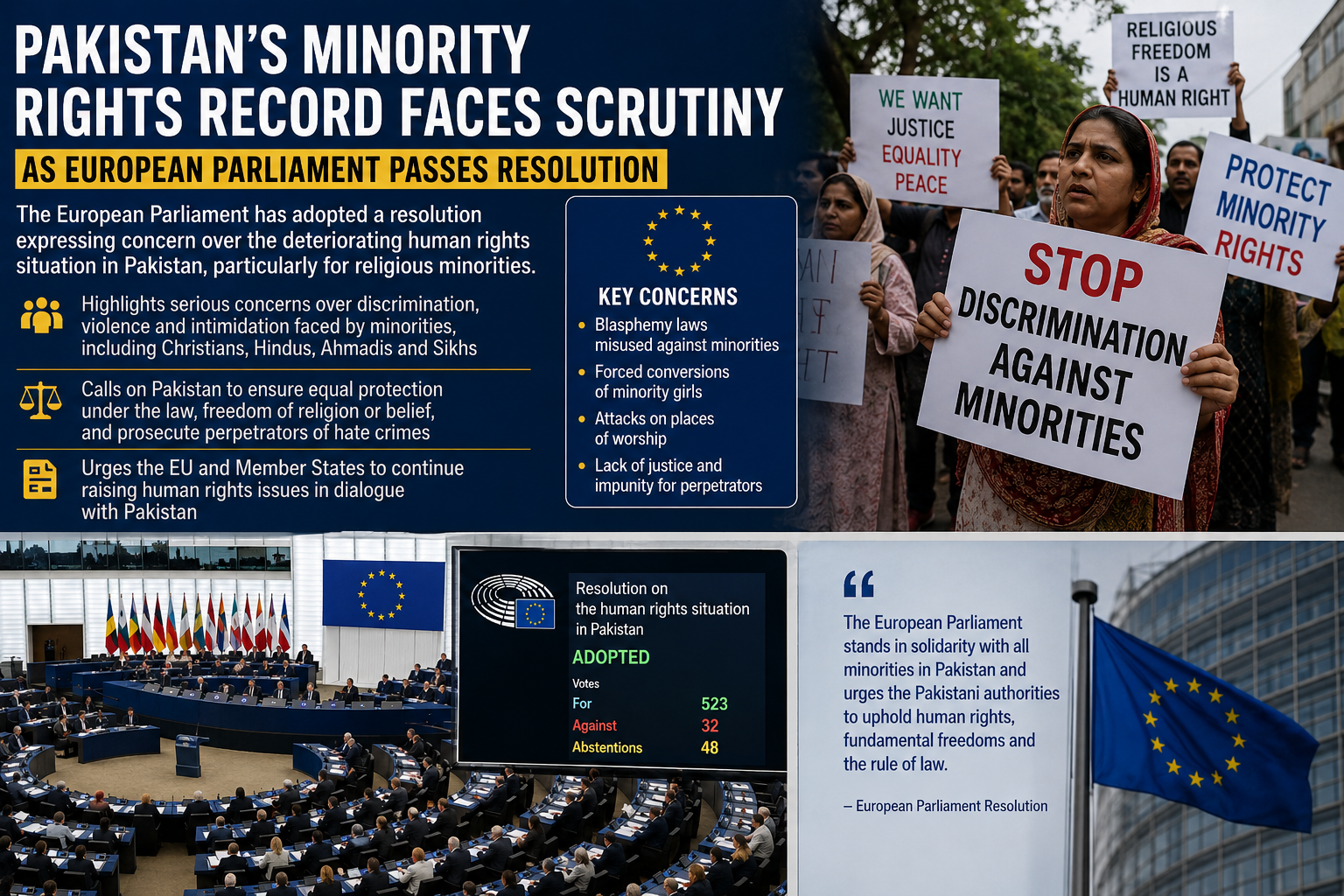
The European Parliament has warned Pakistan that continued human rights violations could put its valuable GSP+ trade benefits with the EU at risk. Lawmakers urged Islamabad to end enforced disappearances, arbitrary detentions, and the misuse of laws against activists, journalists, and minorities, stressing that preferential trade access depends on meeting international human rights commitments.
Key Resolution Details
- Immediate Catalyst: Lawmakers highlighted the emblematic case of Maria Shahbaz, a 13-year-old Christian girl from Lahore. Despite official documents confirming her minor status, courts upheld her conversion and marriage, keeping her with the man accused of abducting her.
- Vulnerable Demographics: UN figures indicate that among victims of forced conversion through marriage, approximately 75% are Hindu and 25% are Christian.
- EU Demands: The European Parliament is demanding that Pakistan ensure victims have access to legal representation and psychological support, and called for the establishment of a national mechanism to handle complaints from the families of abducted or forcibly converted girls.
Broader International Response
- UN Involvement: The resolution closely aligns with statements by UN Human Rights Council experts. The UN previously warned that child victims cannot legally provide consent to marriage, and that Pakistan’s judicial system frequently enables these offenses.
- Trade Pressure: The EU has continuously tied Generalized Scheme of Preferences Plus (GSP+) trade benefits to human rights conditions. MEPs are actively leveraging this economic relationship to pressure Pakistan into improving protections for women, children, and religious minorities