



















Political rights, representation and control over land and natural resources remain contentious issues in Pakistan-occupied Kashmir (PoK) and Gilgit-Baltistan, where local institutions operate within governance structures that give Islamabad significant authority.
The dispute is particularly pronounced in the territory Pakistan refers to as the *so-called Azad Jammu and Kashmir*. Although the region has an elected assembly and a prime minister, its constitutional framework places a specific restriction on political advocacy concerning its relationship with Pakistan.
Article 8 of the territory’s 1974 interim constitution prohibits individuals and political parties from promoting positions against accession to Pakistan. The provision has been criticised because it limits political participation by those advocating independence or alternative constitutional arrangements. Human Rights Watch has documented the effect of the provision on supporters of an independent Kashmir and raised broader concerns about political freedoms in the territory.
The constitutional arrangement also provides Islamabad with an important role in the territory’s affairs. The supplied material describes federal influence extending to security and major policy decisions and cites the role of Pakistan’s Ministry of Kashmir Affairs and intelligence agencies in the political system.
Gilgit-Baltistan has followed a different administrative path. The region has a Legislative Assembly, established in 2009, but remains without representation in Pakistan’s national parliament and does not have the constitutional status of a province.
Governance reforms introduced in 2018 did not eliminate the role of federal institutions. According to the supplied material, Islamabad continues to exercise substantial influence over security, the courts and major policy areas. Political activity is also subject to restrictions concerning advocacy for accession to Pakistan.
These constitutional questions have been accompanied by allegations of serious human rights violations. The supplied material cites evidence presented at a UN Human Rights Council event in October 2025 alleging more than 32,000 cases of enforced disappearance across Pakistan-administered territories and identifying 44 alleged internment centres.
It also alleges that activists in PoK and Gilgit-Baltistan have faced imprisonment, terrorism and espionage charges, while journalists and human rights defenders have encountered threats and restrictions. The figures and allegations cited in the material have not been independently established within the source and should therefore be treated as attributed claims.
Economic questions have added to political tensions, particularly in Gilgit-Baltistan, a strategically important territory through which the China-Pakistan Economic Corridor passes.
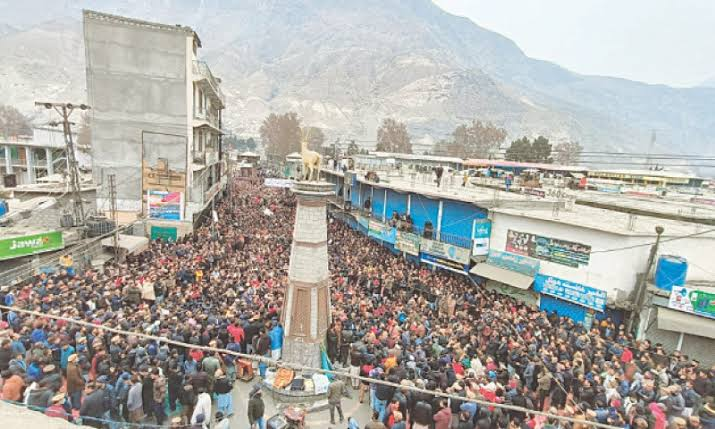
Land ownership, mining and access to natural resources have become recurring sources of local concern. In April 2025, residents of Shigar district protested against what they described as state control over local land and mineral resources. The demonstrations followed controversy surrounding a proposed Mines and Minerals Bill, which activists said could permit the exploitation of resources without adequate involvement of local communities.
The supplied material also alleges that CPEC-related infrastructure has contributed to disputes over land acquisition and compensation. It makes further claims about demographic changes in Gilgit-Baltistan. Those claims require independent verification and are presented here as allegations rather than established findings.
In PoK, political and economic grievances have increasingly converged. The Joint Awami Action Committee, which began organising around demands including lower electricity prices and improved political representation, developed into a broader protest movement during 2026.
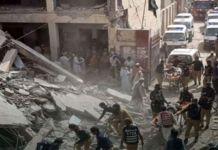
The confrontation between protesters and authorities included internet disruptions, arrests and the deployment of additional security personnel, according to the supplied material. It further alleges that the authorities designated JAAC a terrorist organisation and that activist Shahzaib Habib was killed. The material reports more than 45 deaths and over 200 injuries by June 2026, figures that would require independent verification before being presented as established totals.
The protests have placed renewed attention on the gap between Pakistan’s international position on Kashmir and political disputes within the territory it administers. Islamabad has for decades raised concerns about human rights and political representation in Indian-administered Jammu and Kashmir.
Critics of Pakistan’s policies argue that comparable attention should be given to political rights and governance in PoK and Gilgit-Baltistan. The political and constitutional systems on the two sides of the Line of Control are different, making direct comparisons difficult. But the restrictions documented in the supplied material raise questions about the range of political positions that residents of Pakistan-occupied Kashmir can legally and openly pursue.
For residents of both territories, the issues extend beyond the broader India-Pakistan dispute. They include the structure of local government, access to political representation, control over land and minerals, treatment of dissent and the extent to which communities can influence decisions affecting their future.
The supplied material calls for greater local autonomy and political participation, stronger protection of land and resource rights, and independent investigation of alleged abuses. It also calls for greater protection for journalists and civil society organisations operating in PoK and Gilgit-Baltistan.
The continuing disputes illustrate the complexity of governance in Pakistan-occupied Kashmir and Gilgit-Baltistan. While the territories remain central to Pakistan’s wider Kashmir policy, local political movements increasingly frame their demands around representation, economic rights, administrative accountability and the ability to participate in decisions affecting their communities.
The question confronting Islamabad is therefore not limited to its position in the broader Kashmir dispute. It also concerns how political authority is exercised within the territories under its administration and how much space is available for residents to express dissent, seek greater autonomy and influence the political direction of their own regions.