





















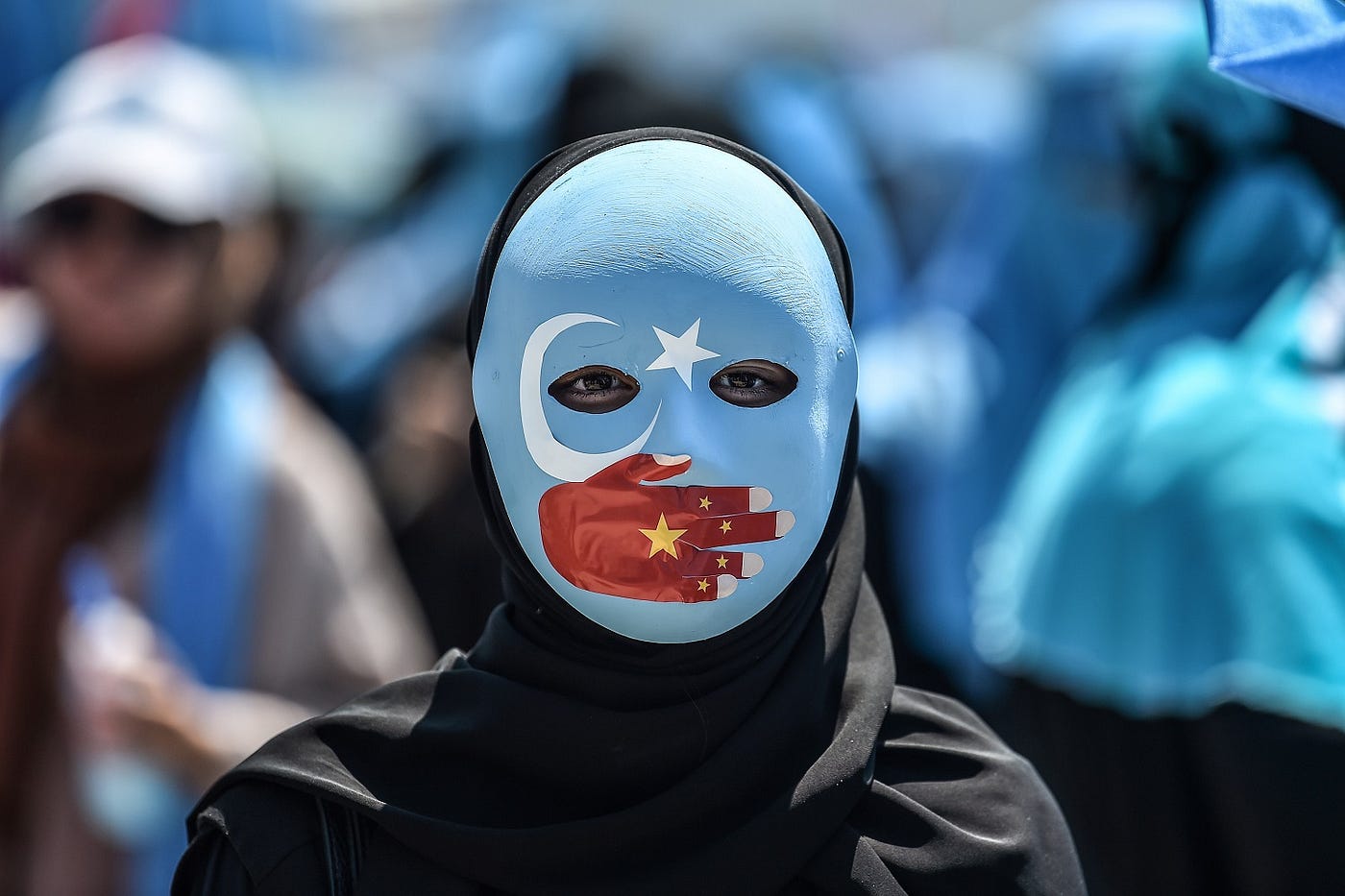
It is a soulful folk song, filled with feeling and history: A love-stricken young man tells God about his hopes and dreams of happiness. Generations of Uyghurs, the Turkic ethnic minority in China’s Xinjiang region, have played it at parties and weddings.
But today, if they download it, play it or share it online, they risk ending up in prison.
“Besh pede,” a popular Uyghur folk ballad, is among dozens of Uyghur-language songs that have been deemed “problematic” by Xinjiang authorities, according to a recording of a meeting held by police and other local officials in the historic city of Kashgar last October. The recording was shared exclusively with The Associated Press by the Norway-based nonprofit Uyghur Hjelp.
The policy has been corroborated by interviews with former Xinjiang residents, whose family members, friends and acquaintances have been detained for playing and sharing Uyghur music. AP has also obtained rare access to the court verdict of a Uyghur music producer sentenced last year to three years in prison for uploading to his cloud account songs deemed sensitive.
How a single song fits into a broad crackdown
The renewed crackdown on cultural expression in Xinjiang, classified as an “autonomous region” but tightly controlled by the central government, suggests a continuation of the past decade’s repressive policies. They have culminated in the extrajudicial detention, between 2017 and 2019, of at least 1 million Uyghurs and other ethnic minorities in China such as Kazakhs, Kyrgyz and Huis, rights activists and foreign governments say.
In 2022, the United Nations accused China of rights violations it said might amount to crimes against humanity in Xinjiang, where Beijing also faces allegations of forced labor, forced sterilizations and family separations as part of a broader assimilation campaign.
The Chinese government maintains its policies in Xinjiang rooted out terrorism and religious extremism after sporadic bouts of violence rocked the region in previous decades. Beijing doubled down on that narrative in particular after the Sept. 11, 2001, attacks brought antiterror policies into the accepted global mainstream.