





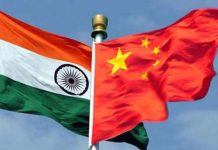

























On Tuesday, yet again, the Chinese Foreign Ministry repeated its theatrics, calling Arunachal Pradesh ‘Zangnan’ and claiming they have full authority to rename “their own territories”.
China’s claim over Arunachal Pradesh has always sounded less like history and more like insistence. Beijing’s claim rests on a surprisingly fragile foundation: a fairly loose imperial association, a selectively remembered treaty, and a modern strategic ambition dressed up as historical grievance.
To understand this, one must begin with the Qing dynasty, which China frequently invokes to anchor its claims. The Qing did exercise suzerainty over Tibet, but suzerainty is not sovereignty. It was a layered, indirect system of influence, reliant on local intermediaries and marked by frequent inconsistencies. Even at its peak, Qing authority in Tibet was uneven. Beyond it, into the eastern Himalayan frontier, it was virtually non-existent.
Empires leave records: administrative orders, taxation systems, military outposts. In Arunachal Pradesh, there are absolutely none that point to sustained Chinese governance. No bureaucracy, no garrisons, no fiscal footprint. What exists instead is silence — both historical and administrative.
Tibet’s connection to the region was still more tangible, but limited. The western tract, particularly around the Tawang Monastery, maintained religious and monastic ties with Lhasa. Tawang functioned as an important centre of Tibetan Buddhism, with some degree of monastic administration and influence over surrounding areas. However, when it comes to influence, especially religious influence, it is most definitely not the same as territorial sovereignty. Beyond this narrow belt, Arunachal remained a mosaic of tribal societies, governed locally and largely untouched by any centralised state.
Even in the foothills, where the Ahom and Chutia kingdoms in present-day Assam and Arunachal Pradesh left cultural imprints, administrative reach was shallow. What emerges from the historical record is not a region governed by Tibet or China, but one defined by the limits of power — geography dictating governance rather than the other way around.
The 20th century did not so much alter this reality as formalise it. At the Shimla Convention, British India and Tibet negotiated the McMahon Line, placing Arunachal Pradesh within British India. China refused to sign the agreement and continues to cite this refusal as proof of illegitimacy.
By 1914, the Qing empire had already disintegrated in the wake of the Xinhai Revolution. China was politically fractured, consumed by internal instability, and struggling to assert authority even within its core territories. Tibet, in this vacuum, functioned with de facto autonomy, effectively conducting its own diplomacy and negotiating its own boundaries.
China’s absence from Shimla was not a principled stand; it was literally a practical limitation. It lacked both the coherence to negotiate and the capacity to enforce.
And yet, a century later, Beijing invokes that absence as the basis of a claim. This brings us to the real question: if the history is this wafer-thin, why does the claim persist with such intensity?
Because Arunachal Pradesh is not just about history; it is about leverage.
Geography, in geopolitics, is destiny. And Arunachal sits at a particularly sensitive intersection of terrain and vulnerability. From the Tibetan plateau, the land slopes downward into the Brahmaputra valley, one of India’s most densely populated and strategically vital regions. Control over Arunachal would not just shift a border — it would alter the military geometry of the eastern sector. Beijing’s motive is to compress India’s defensive depth while expanding China’s operational advantage.