





















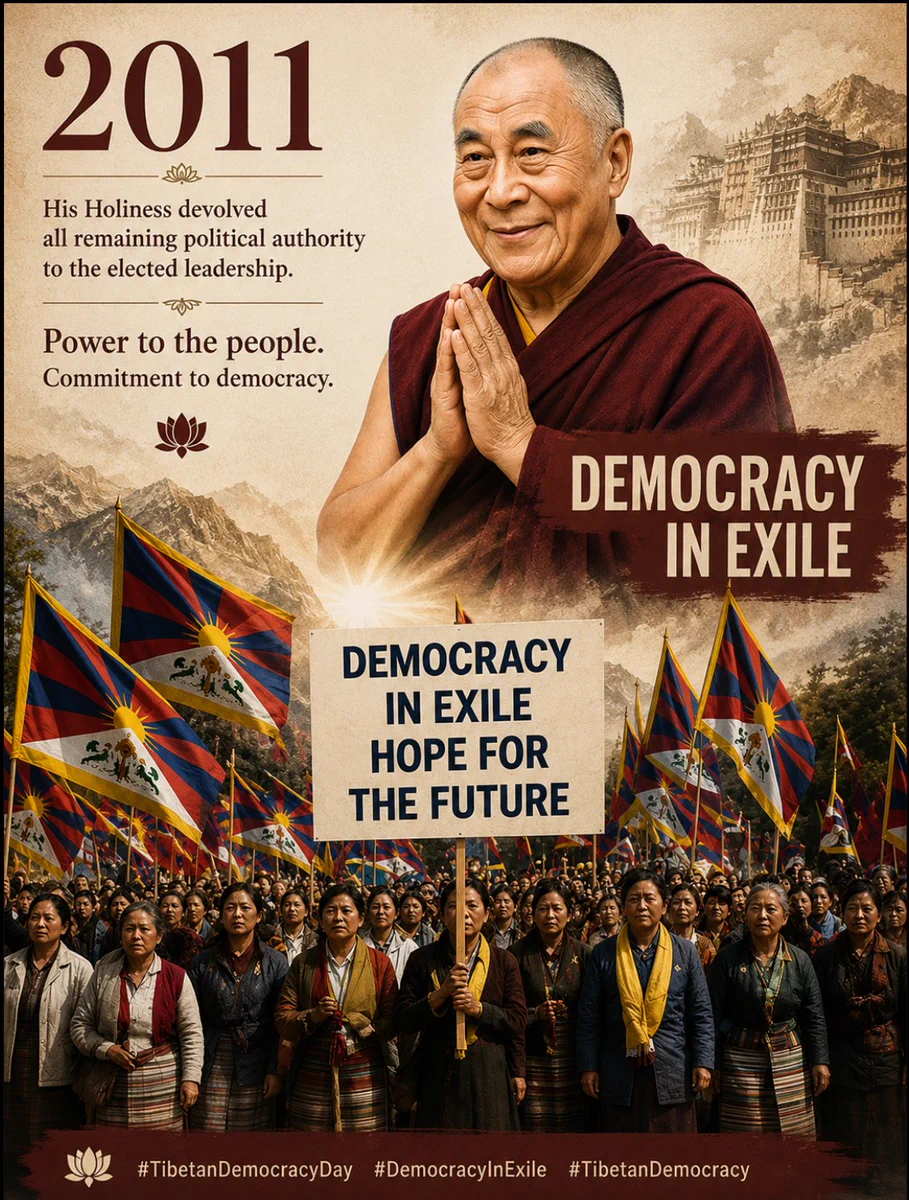
Tibetan Democracy Day is being observed today under the hashtags #TibetanDemocracyDay #DemocracyInExile #TibetanDemocracy, offering an opportunity to highlight the stark contrast between democratic participation among Tibetans in exile and the political system imposed inside Tibet.
The day draws attention to the fundamental gap between representative institutions in exile and one-party rule under the Chinese Communist Party (CCP) in Tibet. While Tibetans in exile have developed elected institutions and mechanisms for political representation, Tibetans inside Tibet remain subject to a political system in which meaningful political competition and independent dissent are severely restricted.
Another major concern is Beijing’s efforts to shape and control the Tibetan narrative beyond Tibet’s borders. Independent Tibetan voices in the diaspora—including activists, community leaders and organisations—face pressure as China seeks to challenge or undermine narratives that contradict its official position on Tibet.
The issue of the Dalai Lama’s succession has further exposed the extent of Beijing’s ambitions. Chinese authorities have repeatedly asserted that the selection of the next Dalai Lama must conform to Chinese laws and procedures. Critics argue that such intervention represents an attempt by the state to control a deeply significant Tibetan religious institution and determine its future leadership.
History itself has also become a contested arena. Beijing officially portrays the events surrounding 1959 through the language of “liberation” and development, while Tibetan accounts emphasise the destruction of political autonomy, displacement, repression and the continuing experience of exile. The competing narratives demonstrate how control over history can become part of a broader struggle over identity and political legitimacy.
Tibetan Democracy Day therefore goes beyond commemorating elections in exile. It highlights a fundamental question: who should have the right to speak for Tibetans and determine their political and cultural future?
As #TibetanDemocracyDay #DemocracyInExile #TibetanDemocracy are observed today, the focus remains on democratic representation, freedom of expression, cultural preservation and the right of Tibetans to maintain an independent voice—both within their community in exile and in discussions about Tibet’s future.